

A tray of potatoes can be great—or disappointingly soft, pale, and greasy. Roasting potatoes with olive oil to crispiness doesn't require complicated techniques. But three things must be right: the potato variety, a dry surface, and sufficiently high heat. The oil is not merely a means to an end. It also determines whether the edges smell nutty, the crust shatters delicately, and the potato tastes like a potato.
No industrial deep fryer. No powder. No tricks with questionable ingredients. Just good potatoes, honest olive oil, and an oven that is truly hot.
Roasting potatoes with olive oil to crispiness: The basics
For classic oven-roasted potatoes, waxy potatoes are generally best. They hold their shape, become creamy on the inside, and develop a firm, golden crust on the outside. Waxy varieties also work well, especially for small potatoes or wedges with the skin on. Floury potatoes soften more quickly and break more easily when turned—this can be intentional if you want to create particularly rough, crispy edges.
The cut is crucial. Cubes, wedges, or halved new potatoes should be as uniform as possible. Different sizes mean different cooking times: the small pieces will burn while the large ones are still firm. For a good balance of crust and soft center, cubes about three centimeters or quartered wedges are ideal.
Wash the potatoes thoroughly. If the skin is good and undamaged, leave it on—that's where the flavor, texture, and part of the rustic character reside. Cut them only after washing. Briefly rinsing the cut surfaces removes loose starch, which otherwise browns unevenly and sticks. Then comes the step many skip: drying them thoroughly. A clean kitchen towel or paper towel is enough. Moisture creates steam. Steam is the enemy of any crust.
The right olive oil for high oven temperatures
Extra virgin olive oil is not just for drizzling over a finished salad. A high-quality, fresh oil is excellent for oven-roasted potatoes, as long as you don't needlessly push it to its breaking point. At 200 to 220 degrees Celsius with top and bottom heat, potatoes roast reliably, and a good olive oil brings much more than mere heat resistance: fruit, a delicate bitterness, and a peppery bite that gives potatoes more depth.
The often-heard claim that you should never heat olive oil does not hold up in a good kitchen. Temperature, duration, and quality are what matter. Fresh extra virgin olive oil with low acidity and clean processing behaves differently than an old, anonymous oil that has long since smelled flat. If the oil smells waxy, musty, or like old fat, the oven will not improve its character. Heat does not make poor quality better. It exposes it.
For a tray of about one kilogram of potatoes, four to five tablespoons of olive oil are usually enough. The pieces should shine with a thin coating all around, not lie in oil. Too little oil leads to dry, unevenly browned surfaces. Too much oil prevents the potatoes from roasting—instead, they will stew rather than become crispy.
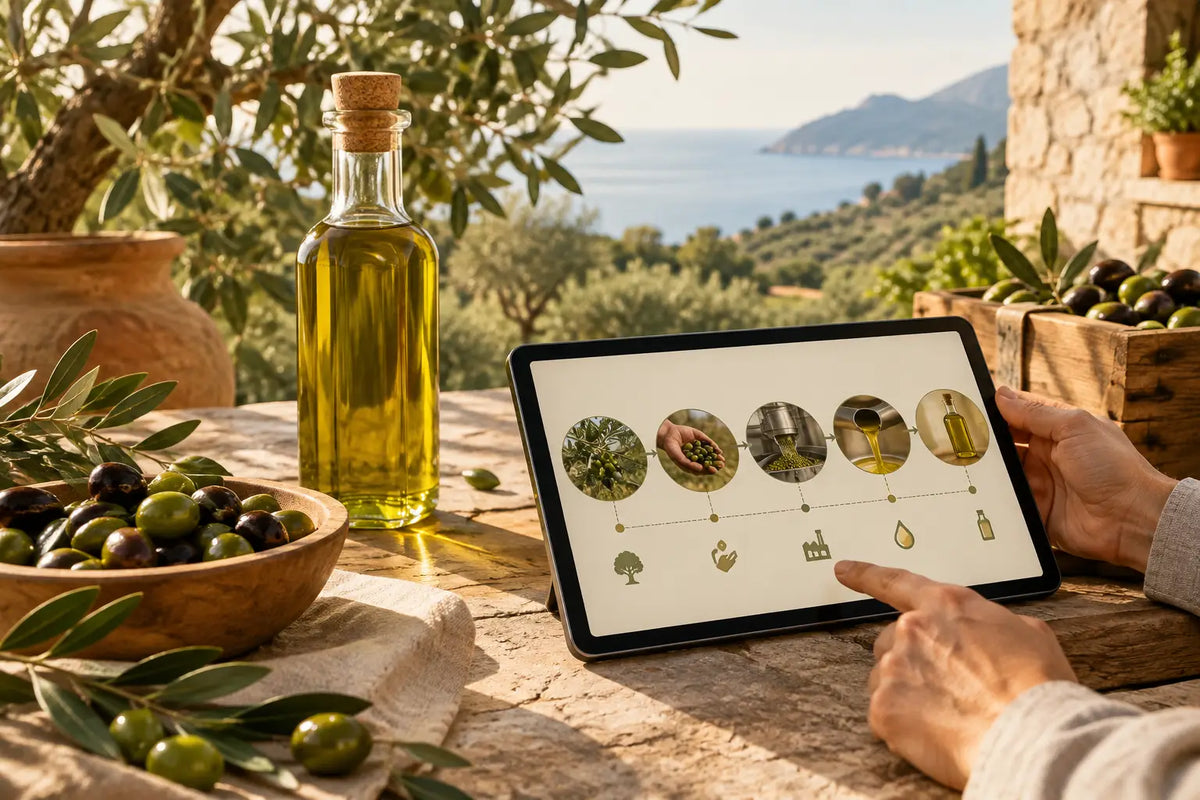
A distinctive Koroneiki olive oil brings green, herbal notes and a pleasant bite. This pairs particularly well with potatoes, rosemary, garlic, and lemon. At O.E.L. Berlin, this exact clarity is at the heart of everything: traceable Koroneiki olives, our own harvest, our own mill. Because with a recipe containing so few ingredients, you cannot hide the origin behind spice blends.
How to create a crust instead of a soft exterior
Preheat the oven to 220 degrees Celsius with the tray inside, using top and bottom heat. For fan-forced heat, 200 degrees is usually sufficient. The preheated tray is no minor detail: when the potatoes hit the hot metal, the underside begins roasting immediately instead of releasing water first. If you have a heavy metal tray or cast-iron dish, you are at an advantage. Both retain heat better than thin trays.
Toss the dry potatoes in a large bowl with olive oil, salt, and, if needed, some freshly ground black pepper. Only then spread them on the hot tray. Caution: Do not stack them or crowd them. The pieces need space so that hot air can circulate. Two trays in the oven at the same time are possible, but then their positions should be swapped halfway through. For maximum crispiness, one tray is the better choice.
Depending on their size, the potatoes need 35 to 50 minutes. Turn them after about 20 to 25 minutes with a sturdy spatula. Do not stir every five minutes. The crust needs time to form. If the underside is still sticking to the tray, it usually just hasn't roasted long enough.
The best time to check is not by the clock, but by sight: intensely golden to dark golden surfaces, slightly cracked edges, and a distinct roasted aroma. A knife should slide into the center without resistance. Then the potatoes can go straight from the tray to the plate—or rest for two minutes if they need to crisp up a little more.
Salt, herbs, and garlic: timing is everything
Salt can be added to the potatoes before roasting. At the usual amount, it does not suddenly draw out all their moisture, as is often claimed. Thorough drying remains crucial. For a particularly clear crust, however, some of the salt can be added after baking—coarse sea salt then creates a nice contrast.
Fresh herbs and garlic are more delicate. Rosemary sprigs can go on the tray from the start, provided they are lightly coated with oil. Finely chopped rosemary, thyme leaves, and garlic should only be added in the last ten to fifteen minutes. Otherwise, they will turn bitter before the potatoes are finished. Lemon zest and a final drop of fresh olive oil belong on top at the very end. This is not a decorative addition, but a difference you can taste.
Why parboiled potatoes sometimes roast better
For particularly irregular, almost restaurant-quality roasted potatoes, you can parboil the potato pieces in salted water for five to eight minutes. They should just begin to soften on the outside while remaining firm on the inside. Drain them, let them steam briefly in the pot, and gently shake the pot with the lid closed. The roughened surface creates more surface area for the oil and heat to work on.
After that, the potatoes go onto the preheated tray as described. This method takes a little longer overall and creates more washing up. In return, it produces particularly many crispy edges. It is not necessary for small new potatoes. For large wedges or if the potatoes are older and drier, it is well worth it.
The most common mistakes when roasting potatoes
If potatoes remain soft despite a high temperature, it is almost always due to too much water or an overcrowded tray. Damp potatoes, a cold tray, and too little space create steam. The result often still tastes good, but it is not a roasted potato with a crust.
Pale potatoes do not automatically need more oil. Often, the temperature is simply too low. Check whether your oven is truly preheated, and if possible, use top and bottom heat instead of a weak fan-forced setting. Another reason can be a baking dish that is too light: glass and ceramic cook reliably but brown less aggressively on the bottom than metal.
Bitter notes rarely come from the potato. Usually, garlic, finely chopped herbs, or paprika powder landed on the tray too early. Spices containing sugar and dried herbs burn quickly. Add them later or mix them in only after roasting.
Frequently asked questions about crispy potatoes with olive oil
Do I need to peel potatoes before roasting?
No. With young or carefully washed potatoes, the skin provides more bite and flavor. Peeling is worth it for very thick, damaged, or greenish skin. Green spots and sprouts should always be removed generously.
Can I combine olive oil and butter?
Yes, but not from the start. First roast the potatoes with only olive oil. Butter can be added towards the end if you want a round, nutty note. It browns more quickly and can burn during a long time in the oven. For a clear, Mediterranean potato, olive oil alone is the more precise choice.
How do leftovers stay crispy?
Do not reheat them in the microwave. Put the potatoes on a hot tray or in a hot pan with a small drop of olive oil. At 220 degrees in the oven or over medium to high heat in the pan, they will come back to life in a few minutes.
Good oven-roasted potatoes do not require a show. They require attention to the raw ingredients, temperature, and timing. If the oil tastes fresh, the potatoes are placed dry on the hot tray, and every edge has space to roast, a simple basic product becomes something you will want to eat straight from the tray.

Leave a comment
All comments are moderated before being published.
This site is protected by hCaptcha and the hCaptcha Privacy Policy and Terms of Service apply.