
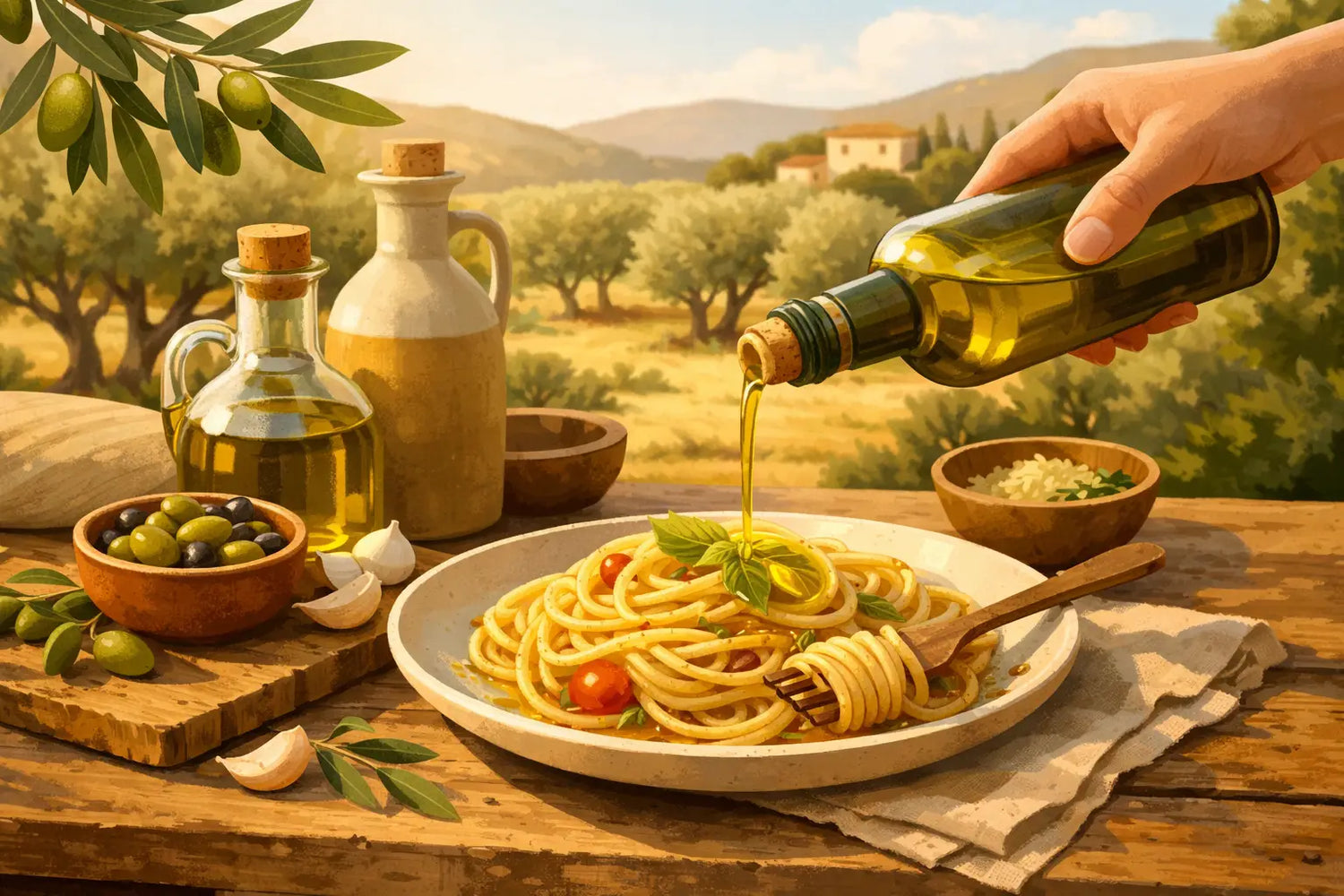
Good pasta doesn't need a long list of ingredients. It needs heat, salt, timing - and the right oil. If you're wondering which olive oil is truly right for pasta, don't just grab the next best bottle. Because a bland, old, or anonymously blended oil will make even excellent noodles mediocre. A fresh extra virgin olive oil, on the other hand, brings fruit, structure, and a clear finish to the plate.
It's not about overpowering every pasta dish with maximum sharpness. It's about balance. The sauce, the pasta shape, other ingredients, and the timing of when the oil is added to the dish collectively determine which oil will best show its strengths.
Which olive oil for pasta? The short answer
For pasta, a fresh, high-quality extra virgin olive oil is the right choice. It should smell clean, clearly of olive, and taste lively in the mouth: fruity, slightly bitter, and with a slightly pungent finish in the throat. This bitterness and pungency are not flaws. In fresh oil, they can be a sign of natural polyphenols and careful processing.
Avoid oils that taste of almost nothing, feel waxy, or are merely greasy on the tongue. They add calories to pasta but no direction. Especially in simple dishes - spaghetti aglio e olio, pasta al pomodoro, or pasta with beans and vegetables - this difference is immediately noticeable.
An oil for pasta doesn't necessarily have to be mild. Mild can work wonderfully when delicate flavors are paramount. But mild must not be confused with flat. A good mild oil has elegance, not emptiness.
The dish dictates the oil's character
Pasta is not a uniform category. A rich ragu sauce demands something different from linguine with lemon. Choosing appropriately doesn't make cooking more complicated, but more precise.
For Aglio e Olio: fresh, green, and clear
In spaghetti aglio e olio, there's nowhere for a bad oil to hide. Garlic, chili, parsley, pasta water, and oil - that's all there is. Choose a fruity extra virgin olive oil with noticeable, but not aggressive, pungency. It should carry the roasted aromas of the garlic and give depth to the chili, without making everything bitter.
A common mistake: the oil gets too hot, the garlic turns dark, and the dish ends up tasting harsh and burnt. Garlic should slowly aromatize in the oil, not fry. You can add some of the oil at the very end over the emulsified pasta. This preserves its aroma.
For Tomato Sauce: pitted fruit against fruit
Tomatoes bring acidity, sweetness, and umami. A medium-intensity, fruity oil with green notes pairs well with them. It binds the sauce, rounds out the acidity, and gives it more depth without overpowering the tomato.
Don't just add the oil to the pot at the beginning. A small splash at the end significantly transforms a simple tomato sauce. The oil then doesn't sit on top as a film of fat, but forms a glossy emulsion with a little pasta water and sauce. That's where the texture that makes pasta taste like a restaurant dish – not reheated sauce – comes from.
For pasta with fish, lemon, or herbs: elegant instead of loud
For mussels, shrimp, lemon, fennel, or fresh herbs, a rather delicate, light-fruity oil is suitable. It can be fresh and have a slight peppery note, but it should not be so dominant that it overpowers the seafood flavors.
Here, timing is especially important. Preferably use the oil raw for finishing. A tablespoon over the plated pasta brings fragrance and length that would have been lost during long cooking.
For mushrooms, lentils, and rich sauces: more structure
Mushrooms, eggplants, salsiccia, lentils, or braised vegetable dishes can handle a more intense oil. An oil with green fruit, artichoke-like notes, bitterness, and a clear pungency can even bring these ingredients together better than a restrained oil.
The ratio is important. If the sauce is already very spicy, salty, or hot, the oil shouldn't compete for attention. Then a few drops as a fresh contrast are enough. Quality doesn't mean always using as much as possible.
Why "Extra Virgin" doesn't automatically mean good
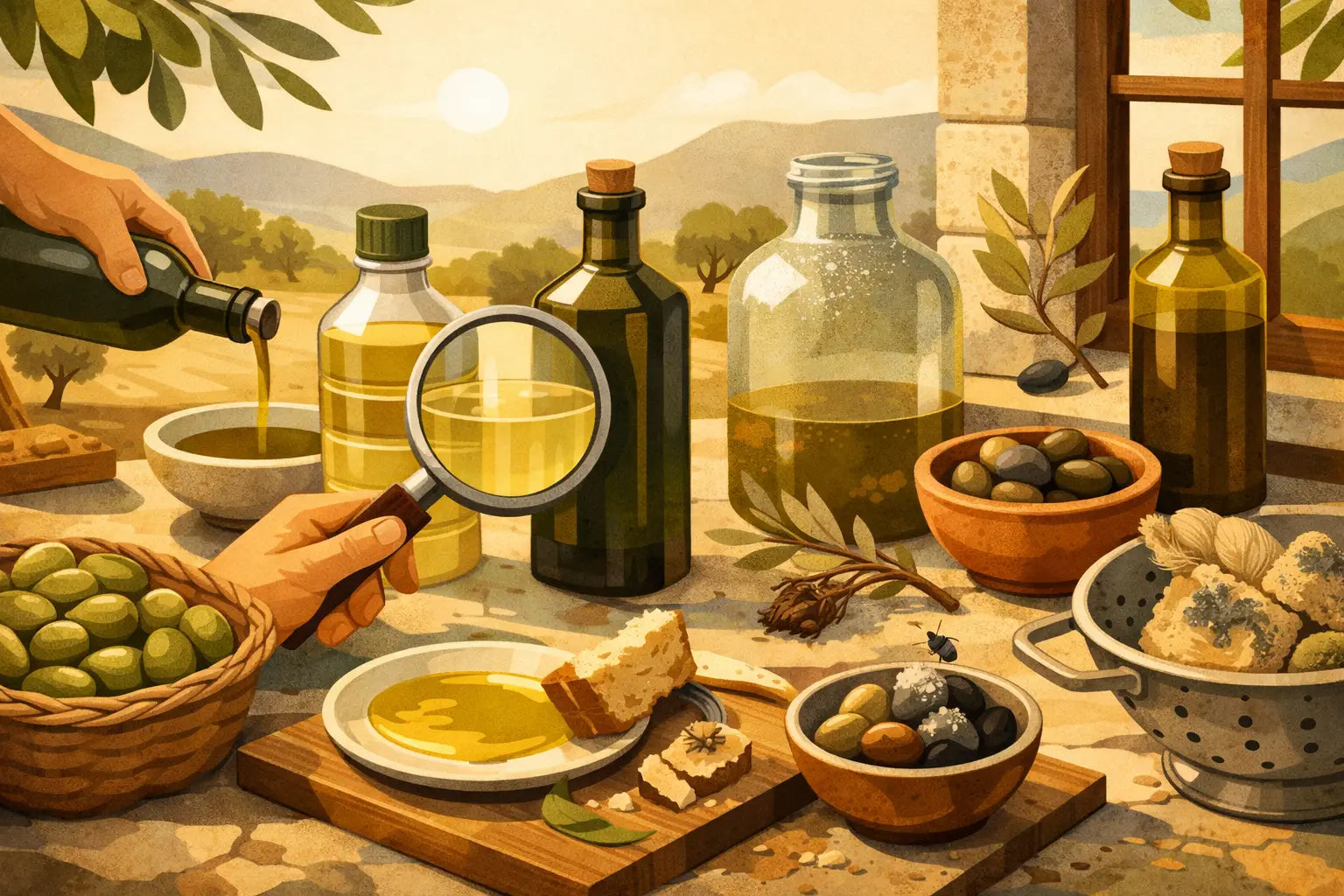
Extra virgin is the highest legal quality grade. This is a sensible starting point, but not a free pass. Even an oil sold as extra virgin can be old, poorly stored, or come from an untraceable blend. The label may state a quality level. But the character is often still missing in the glass.
Therefore, pay attention to specific information about origin, harvest, and processing. A clearly named olive variety, an owned or transparently documented mill, and a traceable harvest are much more meaningful than Mediterranean imagery on a dark bottle. A harvest year or harvest date is also valuable because olive oil is a fresh food, not a decorative object for the kitchen cabinet.
Acidity is also a quality criterion, but not the only one. A low value can indicate carefully processed olives. However, it says nothing about whether the oil tastes lively. The overall picture is crucial: fresh fruit, clean aroma, transparency, and a taste that doesn't seem tired.
Olive Variety and Freshness: What matters on the plate
Single-variety oils make selection easier because they can show a clearer character. For example, Koroneiki olives from Greece often stand for an aromatic profile with green, fruity, and peppery notes. This can pair excellently with pasta, especially when tomatoes, garlic, lemon, vegetables, or legumes are involved.
But the variety alone isn't decisive. The same olive can taste completely different depending on the harvest time, soil, climate, and mill work. Early-harvested olives often produce more intense, greener, and more bitter oils. Riper-harvested olives usually taste milder and rounder. Both can be excellent - provided they are processed cleanly and the oil reaches you fresh.
At O.E.L. Berlin, this traceability is key: Koroneiki olives from their own harvest, processed in their own mill, and an oil whose origin doesn't disappear into the mist of an anonymous supermarket blend. This isn't a romantic extra. It's the prerequisite for ensuring that taste remains verifiable.
Can you heat good olive oil for pasta?
Yes. A high-quality extra virgin olive oil can be used without problems in normal cooking with pasta, vegetables, or sauce. The crucial thing is that it doesn't smoke unnecessarily and isn't exposed to brutally high heat for extended periods. It is very suitable for gently sautéing garlic, onions, or vegetables.
However, a good oil often shows its greatest strength after cooking. Use it in two steps: sparingly for cooking first, then fresh for binding and refining. This brings both depth and aroma to the dish. If you put all the oil in the pan at the beginning, you lose the part for which you paid for quality.
How to store olive oil so your pasta benefits
Light, heat, and oxygen are the enemies of olive oil. Therefore, do not place the bottle directly next to the stove or permanently on a sunny windowsill. A cool, dark kitchen cabinet is better. Seal the bottle securely after use and buy quantities that you will use with pleasure and regularly.
Large containers can be useful if you cook a lot - provided you decant into a smaller bottle for daily use. This keeps the main supply better protected, while the oil remains accessible near the stove. Freshness is not a luxury detail. It determines whether your pasta tastes of olive or simply becomes oily.
The best pasta sauce often begins with a simple question: What should be the focus today - the tomato, the garlic, the lemon, the mushroom, or the oil itself? Choose an oil that supports this answer. Then good ingredients, a little pasta water, and the courage to add the last splash of oil only on the plate are all you need.

Leave a comment
All comments are moderated before being published.
This site is protected by hCaptcha and the hCaptcha Privacy Policy and Terms of Service apply.