
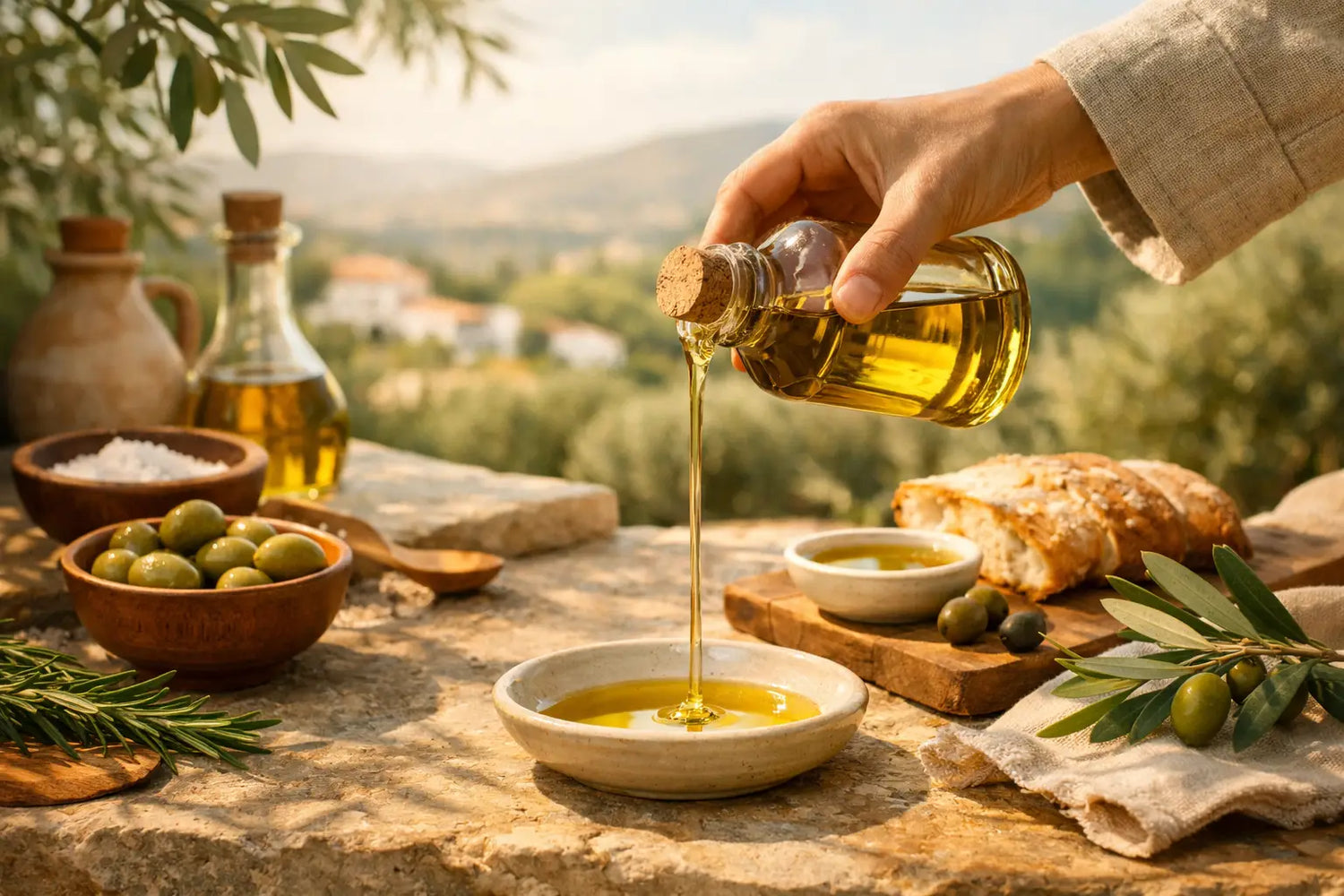
An olive oil can gleam golden-green, be labeled "extra virgin," and still reveal little about its history. This is exactly where this guide to transparent olive oil comes in: It's not the prettiest label that matters, but the answer to a simple question: Can the producer verifiably demonstrate where this oil comes from, when it was harvested, and how it was processed?
Olive oil is not a neutral cooking fat. It embodies the variety, soil, climate, harvest time, and the care of a mill. Therefore, those who cook consciously should not be satisfied with vague promises of origin. No industry. No anonymous blend. No stories without proof.
What transparent olive oil really means
Transparency doesn't begin with a poetic landscape description on the bottle. It starts with concrete, verifiable, and understandable information. A transparent olive oil at least specifies its clear country of origin, ideally the region, the olive variety, and the harvest year. Even better: The farm explains who cultivates the olives, where they are milled, and how short the journey is between harvest and processing.
"Bottled in Italy" is not a statement of origin for the olives. "Blend of olive oils from the European Union" is legally permissible, but culinarily says almost nothing. Such formulations do not exclude good oils. They simply leave crucial questions unanswered: From which regions do the fruits come? How old are the individual batches? Who is responsible for quality and taste?
With a single-variety oil, the characteristics can be classified much more clearly. For example, Koroneiki olives from Greece often taste fresh, green, and peppery, but can vary significantly depending on the harvest and location. Variety alone is not a quality stamp. However, it creates a verifiable basis instead of interchangeable commodity.
The guide to transparent olive oil: These proofs count
A credible producer doesn't have to print every internal business figure on the bottle. But they should be able to openly state the most important facts without evasion. Four areas deserve special attention when buying:
- Origin: Country, region, and as specific a cultivation or producer farm as possible should be traceable.
- Harvest: A clearly stated harvest year is more informative than a mere best-before date.
- Processing: Information on the mill, timely pressing, and storage shows whether freshness is taken seriously.
- Analysis: Acidity, possibly polyphenol levels, and independent laboratory values make quality claims more reliable.
Harvest year trumps best-before date
The best-before date is useful for orientation, but it doesn't reveal how old an oil actually is. Two bottles with the same date can come from different harvests and be completely different in freshness. This is because the bottling time influences the date.
Therefore, look for the harvest year or a specific harvest month. Olive oil is most exciting when its fresh aromas are still present: grass, green tomato, artichoke, almond, or herbs. Over time, these notes fade. This is not a defect, but natural oxidation. Those who cook regularly with good oil are better off buying as needed and looking for fresh stock.
Acidity is a lab value, not a taste test
For extra virgin olive oil, a maximum acidity level of 0.8 percent applies. A significantly lower value can indicate carefully harvested and processed olives. However, it is not a free pass for big quality promises. Acidity cannot be tasted directly, and it does not replace either a sensory test or information about freshness.
The same applies to polyphenols. They are natural plant compounds and contribute to the bitterness and peppery scratch in the throat of many oils. A declared value is convincing if it is clear from which analysis and from which harvest year it originates. Blanket statements without a date or measurement basis remain marketing.
How to read labels and product descriptions correctly
The mandatory statement "extra virgin olive oil" describes a category, not the whole story. It says nothing about whether the olives come from a single region, whether the oil is fresh, or whether the producer understands the value chain. Those who only look at this designation are likely buying a minimum requirement, not a verifiable origin.
Look for precise language. "From Greece" is better than an EU blend, but "Koroneiki olives from Laconia, own harvest, processed in our own mill" is more specific. Precision creates responsibility. Because those who make precise statements must stand by them.
Terms like "cold-pressed" also deserve a second look. They sound good, but alone are no guarantee of exceptional quality. Crucial factors are hygienic processing, speed after harvest, controlled temperatures, and clean storage. Good producers explain these connections instead of hiding behind a single buzzword.
Organic certification is also valuable, but answers a different question: It concerns the type of cultivation and compliance with defined standards. It does not replace origin transparency, sensory quality, or a fresh harvest. The best purchase criterion is therefore never a single seal, but a coherent overall picture.
Taste is an honest part of the control
Transparency doesn't end with the datasheet. Open the bottle and consciously taste the oil. A fresh extra virgin olive oil should be vibrant. It can smell of green herbs, freshly cut grass, unripe almond, or tomato leaf. In the mouth, bitter notes and a pleasant pungency may follow.
Rancid, waxy-fatty, moldy, or wine-like impressions, however, are warning signs. Of course, not everyone likes an intensely peppery oil. For mild dishes, delicate fish, or desserts, a softer profile may even be the better choice. Transparency does not mean that every oil must taste the same. Transparency means that you know what style to expect before buying.
A producer who takes their oil seriously therefore names not only technical values, but also aroma and possible uses. Robust oils add excitement to roasted vegetables, beans, salad, or warm sourdough bread. Milder oils accompany mozzarella, potatoes, or delicate leafy greens without overpowering everything. Quality is not shown by an oil dominating every dish, but by its ability to be used consciously.
Packaging protects the oil - or it allows it to age
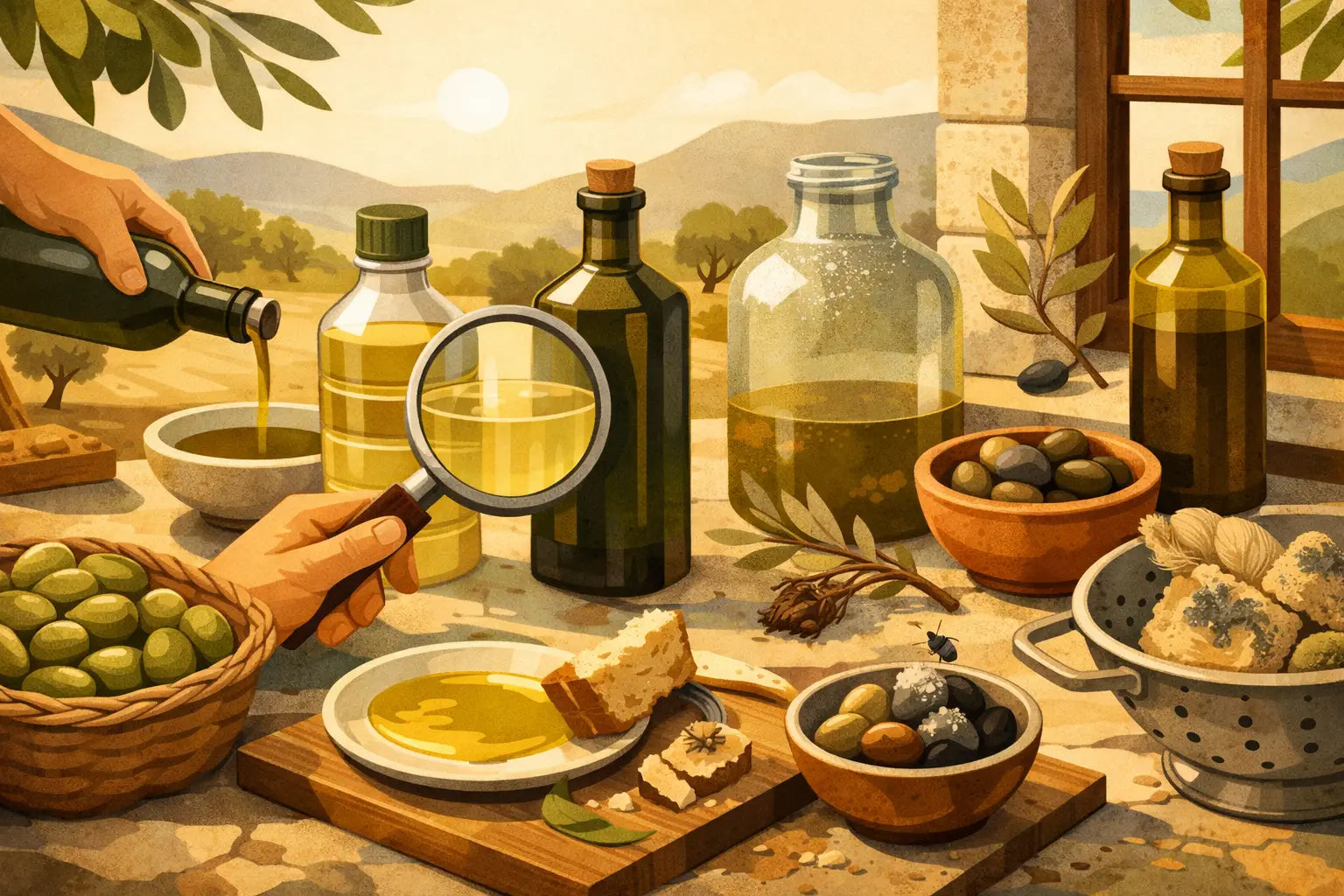
Light, heat, and oxygen are the enemies of olive oil. Dark glass, a light-proof tin, or a well-protected refill system help preserve the aromas. Transparent decanters on a sunny countertop may look good, but are a bad idea for high-quality oil.
Large containers can be useful if a lot of cooking is done in your household. They are often more resource-efficient and economical per liter. For a small household, however, a large bottle opened for months can cost freshness. In that case, a smaller bottle or refilling a handy kitchen bottle is the smarter solution. What matters is not the container size, but how quickly you consume the oil after opening.
Store it cool, dark, and tightly sealed, but not in the refrigerator. At low temperatures, olive oil can flake or become cloudy. This is usually harmless, but makes handling unnecessarily complicated. A closed kitchen cabinet away from the stove and window is the better place.
Questions where evasion is an answer
Those looking for transparent olive oil can ask demanding questions: Where were the olives harvested? What variety is included? From which harvest year does the oil come? How quickly did the fruits get to the mill? Are there current laboratory analyses? Those who give clear, concrete, and consistent answers treat customers as people with taste - not as a target group for pretty pictures.
O.E.L. Berlin focuses precisely on this: Koroneiki olives, own harvest, and own mill are not presented as decoration, but as a verifiable basis for origin, freshness, and character. This is the difference between a brand that sells oil and one that takes responsibility for every bottle.
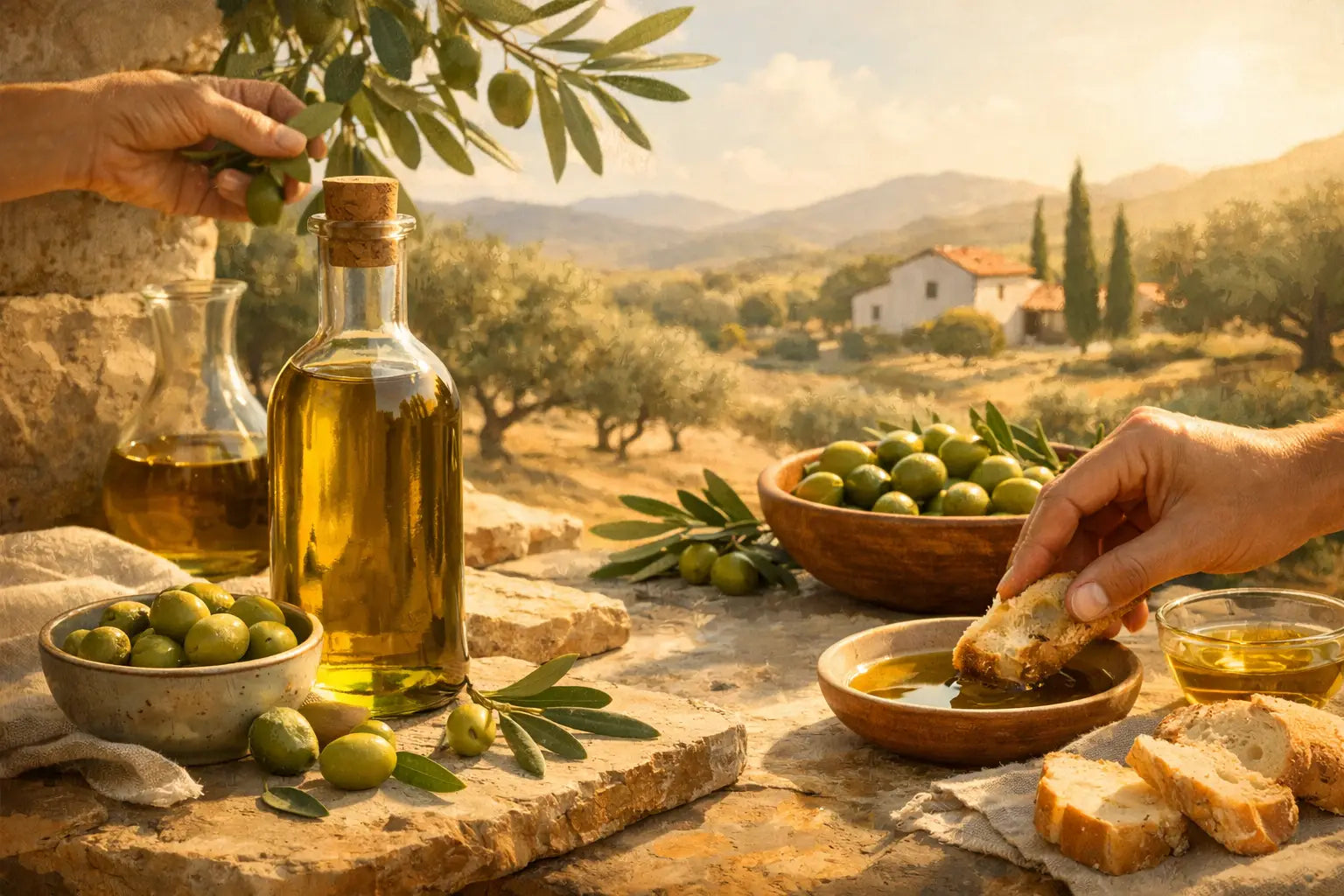
Next time you have bread with oil, salad, or the last drop over warm pasta, a simple habit is worthwhile: Don't just buy based on price, color, or origin romance. Buy where questions are welcome. A good olive oil doesn't have to be mysterious to taste special.

Leave a comment
All comments are moderated before being published.
This site is protected by hCaptcha and the hCaptcha Privacy Policy and Terms of Service apply.