
An empty olive oil bottle is not a waste problem, but a purchasing decision. Anyone who regularly uses good oil does not need a new designer bottle with every purchase. They need a way to replenish their supply without unnecessarily consuming materials. That is exactly why the trend toward food refill systems is more than just a green gesture. It is changing what we expect from packaging: it should protect, inform, and be reusable—not be discarded after a single use.
However, when it comes to fine foods, everything hinges on an inconvenient question: Does the product in the refill system really stay as good as it was when first purchased? The answer is not automatically yes for olive oil, vinegar, spices, or nuts. Refill only works if enjoyment, product protection, and origin are taken as seriously as the packaging footprint.
Why the trend toward food refill systems is here to stay
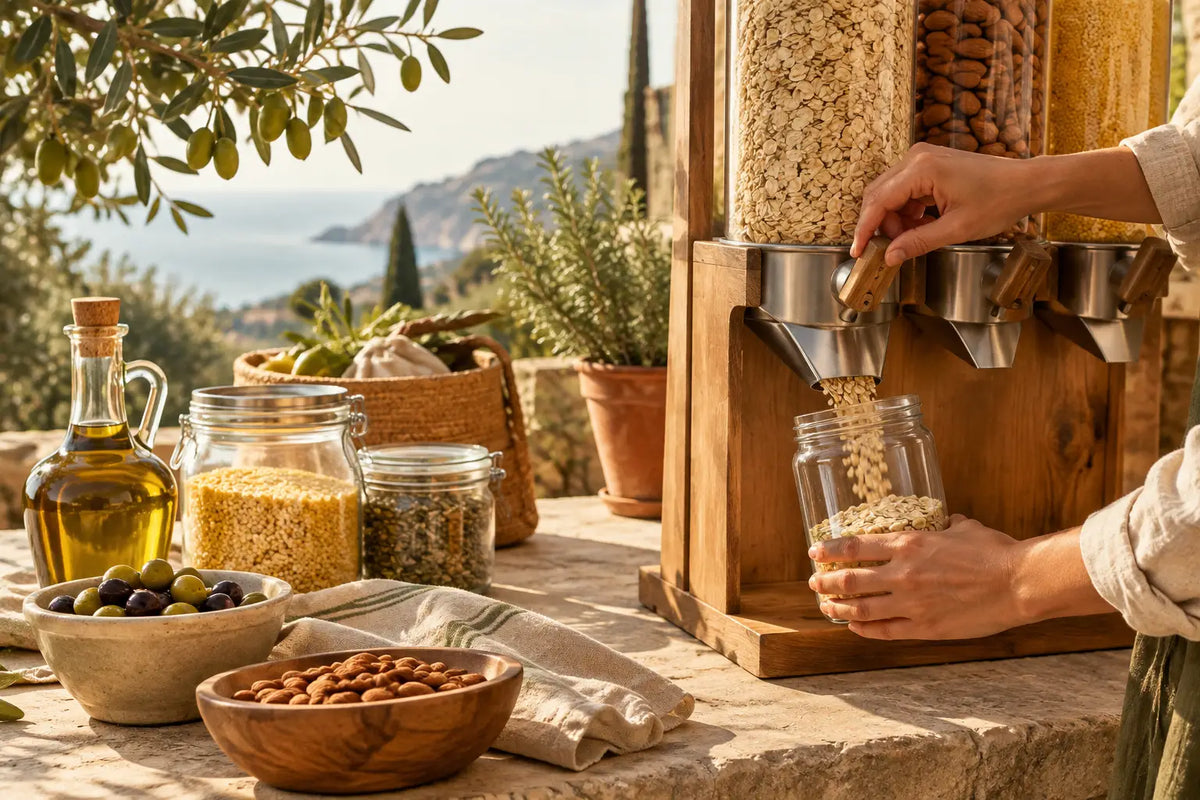
The desire to buy less packaging is understandable. But the real strength of refill runs deeper. Refill systems turn a disposable item into a reusable one. The beautiful, functional bottle stays in the kitchen. The contents are replenished. This saves packaging material when supplies are needed repeatedly and also changes how we view food: moving away from quick consumption toward a supply that is consciously maintained.
This is particularly convincing for products that are on the table almost every day. Olive oil for salads, vegetables, and pasta. Salt that is within easy reach next to the stove. Vinegar for dressings. Anyone who regularly orders such products can plan effectively with larger refill sizes. This is not about doing without, but about better organization—provided the household actually consumes the quantity while it is still fresh.
There is also a cultural aspect. Food is increasingly being judged by its origin, processing, and taste. Anonymous goods in single-use formats are becoming less and less suitable for people who want to know who harvested, bottled, and transported them. A good refill system can make this attitude visible. It says: This product is worth having a permanent place in your kitchen.
Refilling is not automatically sustainable
A refill pack is not a free pass. Anyone who genuinely cares about sustainability must consider the entire chain: material use, shipping weight, protective function, shelf life, and actual usage habits. A heavy reusable bottle that is only used once is not a good solution. A large container that is left open too long and loses quality is not either.
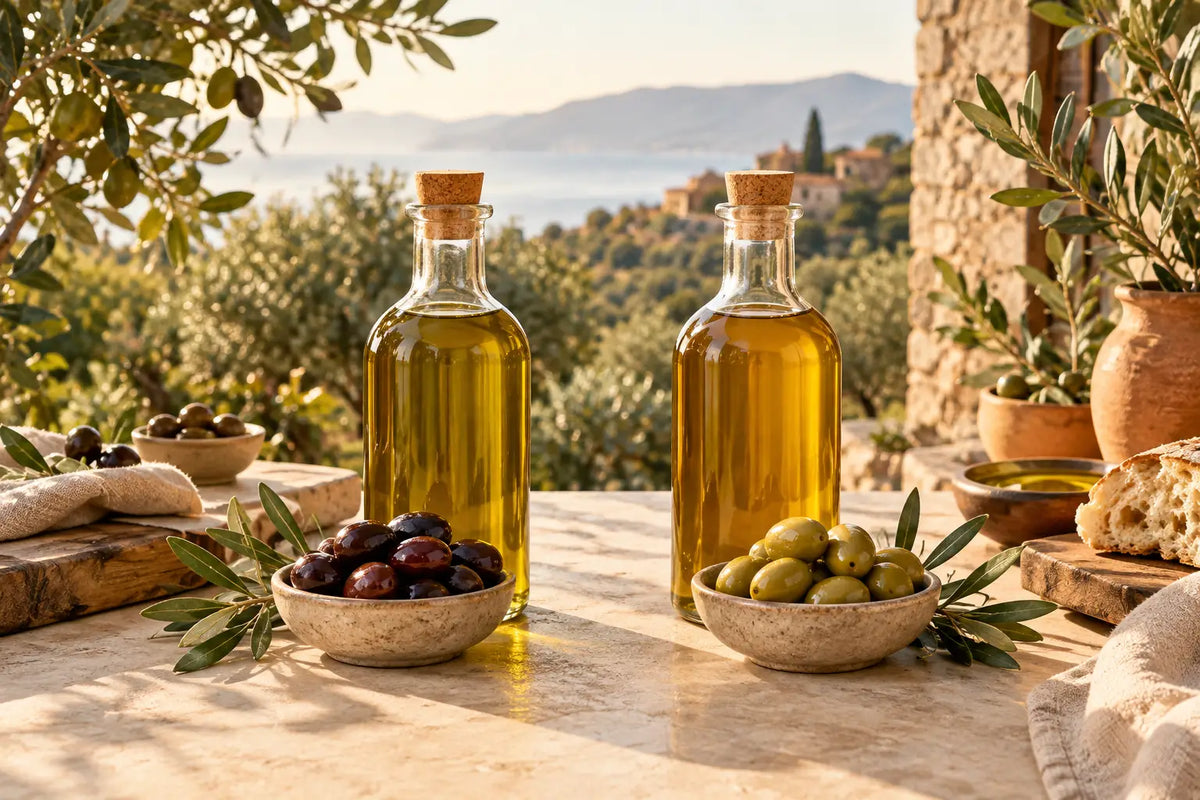
With food, packaging is not an unnecessary addition. It protects aroma, texture, and safety. Light, oxygen, heat, and moisture are enemies of many products. Extra virgin olive oil is particularly sensitive to light and oxygen. If it is stored incorrectly or poured into a bottle that is not clean, it not only loses its fresh aroma of grass, tomato, or green almond. It can also oxidize more quickly and taste flat.
That is why the best solution is rarely the most radical. Loose goods can work perfectly for dry products, provided hygiene, handling, and information are correct. Sensitive liquids, on the other hand, require a well-designed, airtight format. Refill must adapt to the food—never the other way around.
What a good refill system for fine foods must be able to do
The deciding criterion is not: How little packaging can you see? Rather: How much quality is preserved? A credible system combines product protection with practical application. The refill size should be chosen to suit a realistic consumption rate. For a household that cooks daily, a larger supply may make sense. For occasional users, a smaller quantity is often the better, fresher choice.
The primary packaging also deserves attention. It must be airtight, keep light away as much as possible, and be easy to handle cleanly. When decanting, nothing should unnecessarily drip, spill, or come into contact with air. A high-quality original bottle must be sturdy enough to withstand many cycles and designed so that it can be thoroughly cleaned.
Clear information is at least as important. What exactly is being replenished? Where does it come from? When was it harvested or bottled? How should it be stored? For high-quality olive oil, the variety, origin, and processing should not be hidden in the fine print. Anyone who demands transparency should not suddenly become vague about refill.
Hygiene is not an afterthought
Refilling does not begin with opening the bag or canister, but with the bottle. It should be empty, clean, completely dry, and free of old residue. Water residue is not a good idea with oil. Mixing fresh oil with a final, long-opened residue is not an elegant solution either. Use it all up first, then refill.
After decanting, the bottle belongs back in a cool, dark place—not on the sunny windowsill and not directly next to the stove. It sounds simple, but it determines whether the oil still tastes vibrant weeks later. Anyone who buys enjoyment should not give it away through poor storage.
The price advantage makes sense—but is not the main reason
Larger refill sizes can be cheaper per liter than small individual containers. This is logical: packaging, filling, and handling costs are distributed differently. Nevertheless, the lower price per liter should not tempt you to buy more than you can easily consume. Food does not become better just because it sits in the cupboard longer.
The stronger reason for refill is the combination of everyday practicality and attitude. The favorite bottle stays where it is used. Replenishing reduces unnecessary repetition. And the decision to choose a product becomes more conscious because it does not have to be renegotiated with every empty bottle.
For suppliers, this creates an obligation. Anyone who offers refill systems must not cut corners on quality or obscure the origin. Especially with premium products, every refill must meet the same standards as the initial order: traceable batches, careful storage, honest product information, and a taste that does not taste like a compromise. That is why O.E.L. Berlin does not view refill as a marketing label, but as a meaningful continuation of a product whose origin and freshness matter from the very beginning.
Which foods refill is really suitable for
Systems work particularly well for products with regular consumption and stable quality when stored correctly. These include high-quality oils, vinegars, salt, spices, legumes, rice, and selected dry goods. For sensitive fresh products, very small consumption quantities, or goods with a short shelf life, a refill model is not always the best choice.
It also depends on the household. Anyone who lives alone and rarely cooks will benefit more from small, fresh formats. A family or a household that cooks frequently can intelligently use larger containers. There is no morally superior packaging that suits everyone. There is only the right solution for the product, consumption, and handling.
The food trend will retain its substance when refill is not sold as a compromise. Good systems do not make the kitchen more complicated, but better: less unnecessary material, a sensible supply, and products that are treated until the very last drop as they were made—with respect for craftsmanship and taste.


Leave a comment
All comments are moderated before being published.
This site is protected by hCaptcha and the hCaptcha Privacy Policy and Terms of Service apply.