
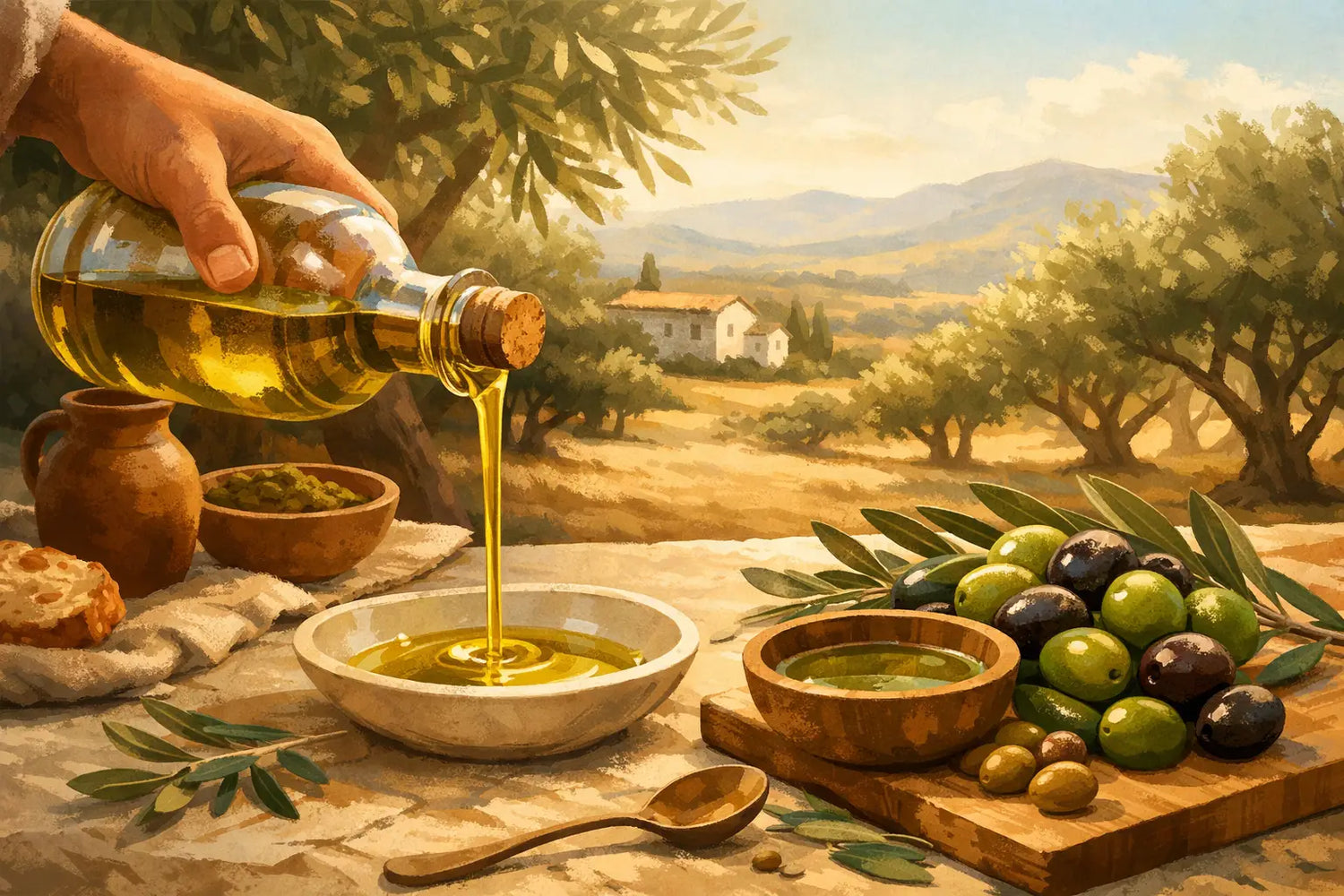
Those who try a truly good extra virgin olive oil for the first time are often surprised. It doesn't just taste soft, fruity, and well-rounded, but sometimes distinctly bitter. That's why the question so often asked is: why is olive oil bitter? The short answer is uncomfortable for anyone who has been trained on neutralized mass-produced goods: bitterness is often not a defect, but a sign of quality.
Why is olive oil bitter - and when is that a good thing?
Bitterness is primarily caused by polyphenols. These are natural plant compounds that protect the olive from stress, heat, and pests. In the oil, they provide character, stability, and that clear, sometimes green tartness that lingers on the tongue. When tasting a fresh, cleanly processed oil from early-harvested olives, this bitter note is often experienced quite directly.
The crucial factor, therefore, is not whether an olive oil is bitter, but how. A precise, vibrant bitterness appears green, fresh, and appetizing. It is reminiscent of artichoke, green almond, herbs, or chicory. A dull, unpleasant bitterness, on the other hand, can indicate over-extraction, unclean processing, or an oil that is out of balance. Quality always shows itself in the interplay of elements, not in a single sensation.
Many consumers have grown accustomed to industrial blends that are designed to taste as palatable as possible. Little bitterness, little pungency, few sharp edges. This is convenient, but often sensorially poor. An oil with strong character doesn't aim to be everybody's darling. It wants to taste like olive.
The most important causes of bitterness in olive oil
Early harvest brings more structure
The earlier olives are harvested, the greener, fresher, and richer in phenols the resulting oil usually is. Unripe or semi-ripe fruits contain more of the substances that create bitterness and pungency. However, the yield is lower. This is precisely where a classic conflict of goals arises: those who produce in bulk often wait longer. Those who prioritize quality and sensory excitement harvest earlier and accept fewer liters per kilogram of fruit.
The result is often more intense. Not diluted, but vibrant. This bitterness is not an accident, but the result of a conscious decision in agriculture.
Variety and origin play a role
Not every olive tastes the same. Varieties like Koroneiki, Picual, or Coratina are known for distinctive, often bitter and peppery oils. Other varieties are milder. Climate, soil, altitude, and water supply also influence the aroma profile. A dry year can increase the concentration of certain ingredients. A cooler microclimate can emphasize freshness.
Therefore, bitterness should never be considered in isolation from its origin. A good oil carries its landscape within it. To ignore this reduces olive oil to mere fat. This does not do justice to the product.
Fresh processing makes the difference
The truth often lies between harvest and mill. When olives are processed immediately after harvesting, the aromas remain cleaner, fresher, and more precise. If the fruits are stored too long in sacks or piles, a loss of quality begins. Then off-notes arise that have nothing to do with pleasant bitterness.
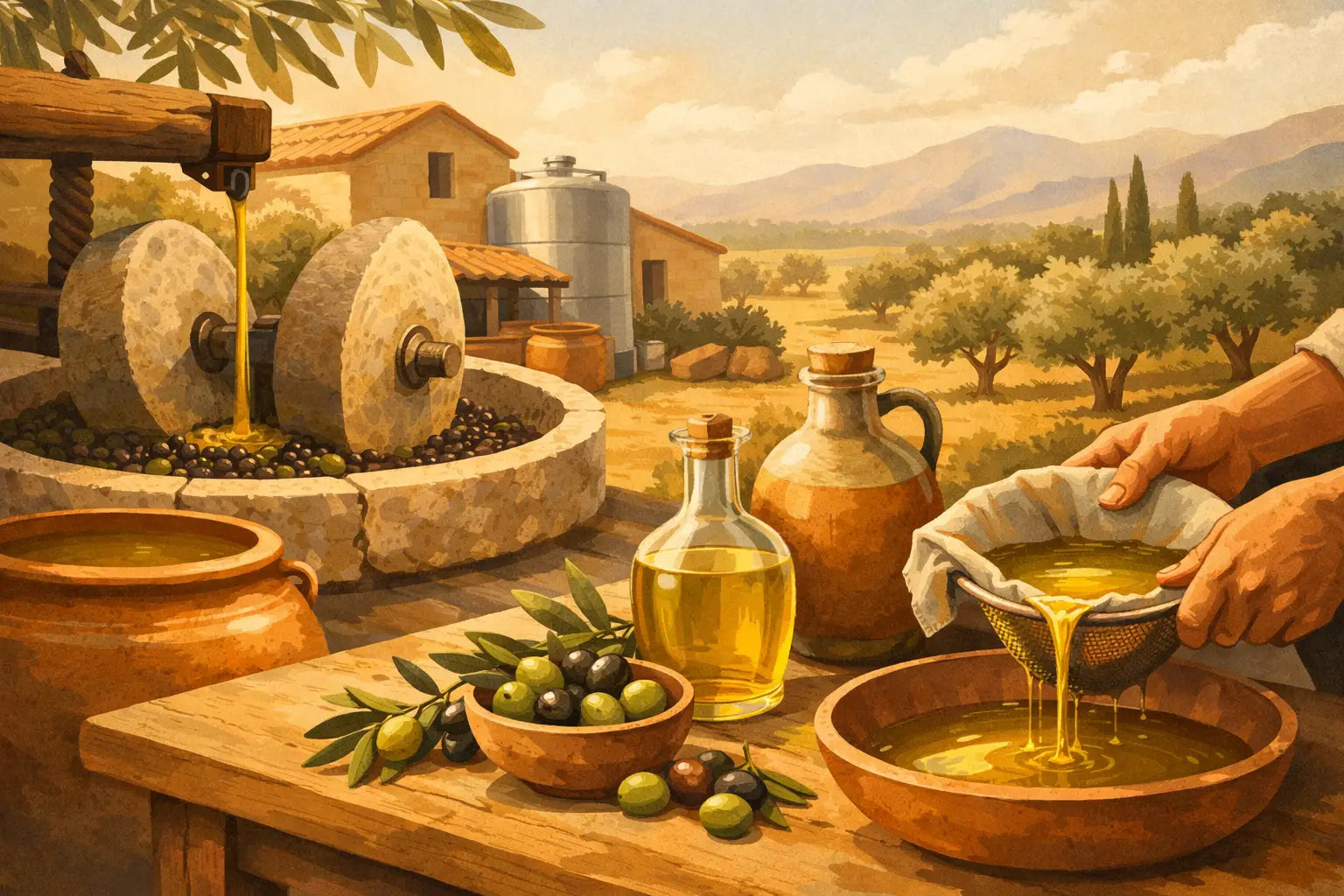
Precision also counts in the mill. Temperature, duration of malaxation, and oxygen contact influence which substances are preserved and how the oil will taste later. Those who work with artisanal care can preserve bitterness without the oil becoming coarse or unbalanced.
Bitter is not always bad
The misconception runs deep: bitter equals spoiled. That might be true for coffee. Sometimes for salad too. With olive oil, the matter is more nuanced. A high-quality extra virgin olive oil can and should be bitter if this note harmonizes with fruitiness and pungency.
Sensorially, fruitiness, bitterness, and pungency are even considered the three positive pillars of a good extra virgin olive oil. If all of these are missing, the oil is not automatically bad. But often it is simply harvested very late, heavily filtered for palatability, or blended in such a way that it causes as little resistance as possible. That can work in everyday life. It's just rarely the most exciting thing in the glass or on the plate.
Anyone who tastes high-quality oils quickly realizes: bitterness adds depth. It extends the flavor. It provides contrast to sweetness, salt, and acidity. Without it, much tastes flat.
Why bitter oils are often better cooking oils
In a serious kitchen, the goal is not for an oil to remain invisible. It should carry, structure, and give direction to a dish. A bitter, fresh olive oil does just that. Over white beans, tomatoes, burrata, grilled vegetables, or a piece of fish, it provides not only fat but also excitement.
Bitterness works particularly well where it has antagonists. Ripe tomatoes take away its harshness. Lemon juice enhances the green notes. Salt makes it rounder. Bread with a soft crumb allows it to stand out clearly. Bitterness is therefore not an obstacle, but a tool – if the oil is well made.
For frying, the topic is a bit more sober. A very intense oil can dominate delicate dishes. This is not a mistake, but a question of application. For a delicate mashed potato or a mild cake, some prefer a gentler oil. For legumes, oven-roasted vegetables, or a finish on soup, it can be more robust. Quality also means choosing the right style for the right dish.
When bitterness indicates a flaw
Not every bitter note is noble. Sometimes an oil tastes harsh, metallic, dry, or unpleasantly lingering at the finish. In such cases, it is worth tasting more closely. Bitterness can be problematic if the oil appears dull overall, shows little fruitiness, or is accompanied by off-notes.
Warning signs include aromas reminiscent of an old cellar, vinegar, damp cardboard, wax, fermented fruits, or rancid nuts. In such cases, the problem is not in the bitterness itself, but in poor fruit quality, inadequate storage, or unclean processing. Light or heat damage can also throw an oil out of balance.
Therefore, the question "why is olive oil bitter" alone is not enough. The better question is: Is the bitterness fresh, clear, and integrated – or does it appear dull and flawed?
How to recognize good bitterness when tasting
An honest oil first reveals fruitiness. Perhaps it smells of freshly cut grass, green banana, olive leaf, or herbs. In the mouth, the bitterness then emerges, usually on the sides of the tongue. Shortly thereafter, a peppery pungency often follows in the throat. This sequence is typical for fresh, polyphenol-rich olive oil.
When tasting, pay attention to balance. Good bitterness builds up instead of simply hitting you. It remains present, but not dirty. It makes you crave the next sip or the next bite. Bad bitterness appears isolated, drying, and lacks aromatic depth.
Another point is temperature. Directly from cool storage, oil tastes more muted. At room temperature, it reveals more fragrance and usually shows more clearly how the bitterness is embedded. This sounds trivial but surprisingly changes a lot.
Bitterness, polyphenols, and health
Those who delve deeper into good olive oil quickly come across polyphenols. They are not only relevant for taste but also nutritionally interesting. High polyphenol levels are considered an indication of a fresh, antioxidative stable oil. Therefore, pronounced bitterness often correlates with the qualities that discerning buyers seek: freshness, protection against oxidation, and a sensorially active profile.
Of course, here too, more is not automatically better. An extremely phenolic oil can be great, but not for every person and not for every dish. Those who only know mild oils so far sometimes need a little time. Taste is learned. And good habits often begin where products once again show some of their natural distinctiveness.
Why many supermarket oils taste hardly bitter
Because they are designed precisely for that. Later harvest, large blends from various origins, long distances, standardized profiles – all of this often leads to oils that are as inoffensive as possible. The problem is not just the milder taste. Often, it also entails a loss of freshness, origin character, and transparency.
Once you have tasted a traceable, early-harvested, and cleanly milled organic olive oil, you immediately understand the difference. At O.E.L. Berlin, that's precisely the point: no anonymous commodity, but oil with a clear origin, its own harvest, and a flavor profile that is not trimmed for arbitrariness.
In this context, bitterness is not a flaw to be dismissed. It is part of a sensory truth. The olive does not taste like nothing.
So, if your olive oil is bitter, don't jump to conclusions. Try it with bread, tomato, warm beans, or simply plain. Perhaps it's not too much bitterness at play, but rather genuine olive oil for the first time.


Leave a comment
All comments are moderated before being published.
This site is protected by hCaptcha and the hCaptcha Privacy Policy and Terms of Service apply.