

Those who want to order Greek delicacies online should ideally not just buy a few Mediterranean products for stock. They choose between origin and interchangeability, genuine craftsmanship and industrially smoothed mass-produced goods. This is precisely where enjoyment separates from mere packaging.
Many things look good online. Black labels, sunny pictures, a few Greek terms - and suddenly a product appears authentic. But good delicacies are not created in marketing. They are created in the field, during harvest, in the mill, during processing, and in the question of whether a producer is willing to disclose all of that. No tricks. No smokescreens. Those who sell quality can explain it.
Ordering Greek Delicacies Online Means Looking Closer
The biggest advantage of online shopping is not convenience. It's the chance to make better decisions. In a store, often only the front label and price tag remain. Online, significantly more information should be available - and if it's missing, that's already a statement.
With Greek delicacies, origin comes first. Not as decoration, but as reliable information. From which region does the olive oil come? Which olive was processed? Is there information about the harvest, the mill, the bottling? Do the olives really come from Greece, or just the design? The same applies to pickled vegetables, vinegar, salt, or paprika. Good products don't need romantic tales of origin, but rather verifiable facts.
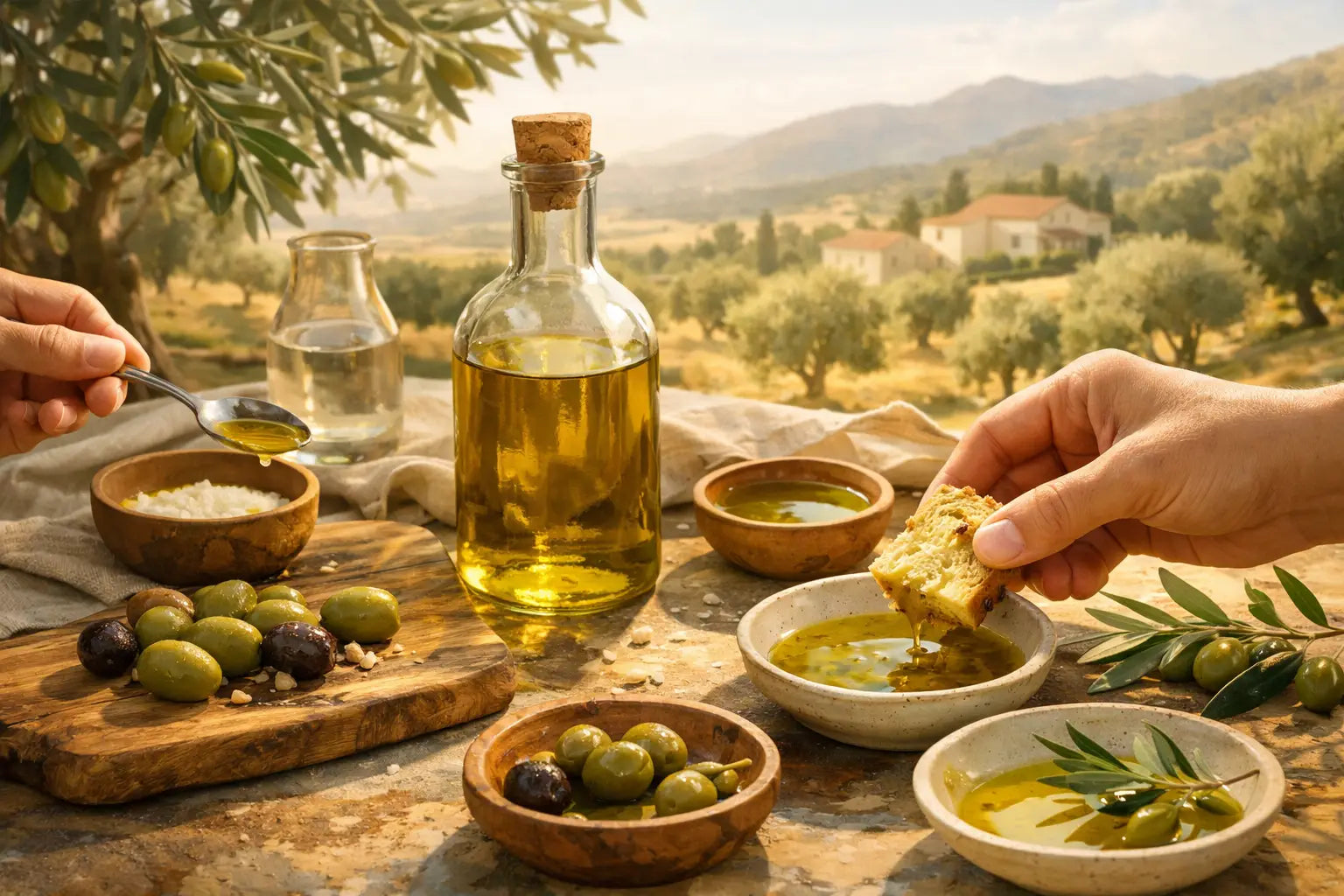
Especially with olive oil, the difference is particularly clear. An anonymous blend from various countries can be formally acceptable and yet remain bland in taste. A traceable extra virgin olive oil from a clearly named harvest, on the other hand, tastes precise, lively, and full of character. Bitterness and pungency are then not a flaw, but often a sign of freshness and polyphenol-rich processing. This may not appeal to everyone immediately. But it is more honest than bland, mass-produced goods.
How to Recognize Genuine Quality
When shopping online, you should not only filter by product categories, but also by evidence. A reputable provider explains what is in the jar or bottle and why it tastes that way. This starts with the variety and does not end with general advertising phrases like "premium" or "traditional."
For olive oil, four points are particularly indicative: harvest time, olive variety, acidity level, and processing speed after harvest. If laboratory analyses or information on polyphenols are added, it gets even better. Of course, not every buyer is fixated on analytical values. But transparency is not a niche topic. It is the basis for trust.
A second look is also worthwhile for olives. Good olives don't just taste salty. They have texture, fruit, sometimes slight bitterness, sometimes depth from the brine or herbs. If products only work with spice blends, there is often no particularly exciting basic quality underneath. The same applies to paprika, vinegar, or salt. Good delicacies don't need showmanship. They must impress on their own.
Why the Price Difference Is Often Justified
Many hesitate to buy online because Greek delicacies in the premium segment seem more expensive than supermarket goods. This is understandable. But cheap and inexpensive are two different things. A low price can mean that somewhere along the chain, mass production, blends, storage duration, or interchangeability were prioritized.
High-quality olive oil is not a standardized raw material. It is a fresh natural product. When olives are harvested early, processed quickly, stored cleanly, and bottled carefully, costs arise - but also taste, freshness, and nutritional quality. Those who cook often notice the difference not only as a finish over salads or vegetables, but already in the pan, in marinades, on bread, and even in simple dishes like beans, yogurt, or tomatoes.
This does not mean that more expensive is automatically better. There are overpriced products with a beautiful story and mediocre content. This is precisely why a critical look at the facts is worthwhile. If price, origin, and sensory quality match, premium is not a pose, but a sensible decision.
Which Products Are Particularly Worthwhile Online
Not every delicacy benefits equally from online shopping. It is particularly useful for products whose quality is rarely as transparently comparable in brick-and-mortar stores. First and foremost, this includes extra virgin olive oil. Here, freshness, variety, mill, and bottling are crucial - information that can be presented better online than on a shelf.
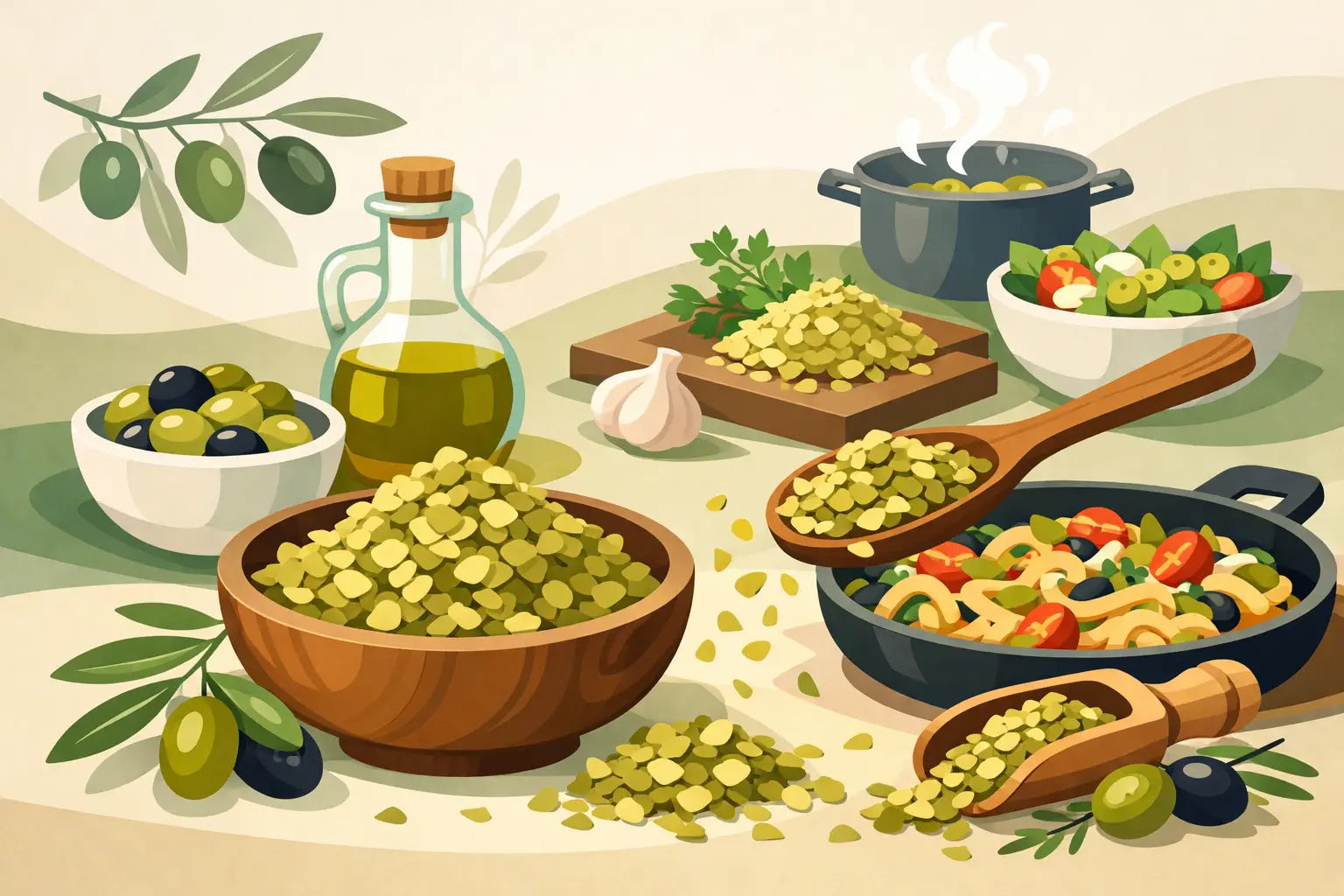
Olives in curated qualities are also interesting, meaning not just arbitrary mass fillings, but varieties with a recognizable profile. Those who enjoy cooking also benefit from specialties that are used much more frequently in everyday life than one might think: olive flakes for dressings and toppings, characterful vinegars, good salt, or paprika with genuine aroma instead of mere pungency.
Gift sets are also useful online if they are not just beautifully packaged, but also represent a clear selection. The deciding factor is whether they genuinely introduce beginners to quality or merely bundle residual stock decoratively. Curation is only worthwhile if someone with taste and conviction has made the selection.
The Difference Between a Shop and an Origin Partner
Many online shops sell Greek delicacies. But not all are equally close to the product. Some curate purchased goods from various sources, others work directly with clearly defined producers or their own production. Both can work. The difference lies in the depth of responsibility.
A retailer who merely claims origin usually speaks generally. An origin partner speaks specifically. They name the region, harvest, processing, and often the reason why a product turned out the way it did. This proximity is noticeable not only in texts but also in the assortment. It appears focused rather than arbitrary. Fewer products, more statement.
This is often where the higher quality of a curated direct model lies. If a brand doesn't want to be everything to everyone, but takes a few things seriously, the chance that taste and promise match increases. O.E.L. Berlin stands precisely for this attitude: no anonymous average, but clearly explained origin, sensory quality, and products that were not developed for shelf space, but for the kitchen.
Ordering Greek Delicacies Online Without a Bad Buy
To avoid bad purchases, you shouldn't just react to beautiful product images. A simple question is helpful: Would I still buy this product if the label were completely white and only the facts remained? That is, variety, origin, harvest, ingredients, processing, packaging, storage instructions.
Look for complete ingredient lists. For clear indications of origin. For information on storage and shelf life. For olive oil, a dark, protective container is often sensible, even if transparent bottles look more attractive in photos. Larger formats are worthwhile for households that cook regularly - provided the oil is used quickly and stored well. Those who rarely use it are better off with smaller units, because freshness is more important here than the price per liter.
Reviews should also be read with caution. They are especially useful when people speak specifically about taste, freshness, pungency, bitterness, or use in the kitchen. Pure statements like "super delicious" are not very helpful. Even less helpful are five stars without content. Good delicacies sometimes even polarize slightly, especially if they have rough edges. This is not automatically a warning sign.
How Good Greek Delicacies Change Everyday Life
Ultimately, it's not about a romantic Mediterranean image on the kitchen table. It's about how a product changes cooking. A precise olive oil turns lentils, fish, roasted vegetables, or simple sourdough bread into something unique. Good olives replace snacks that are just loud. A clean vinegar brings excitement to salads, legumes, and stews. Suddenly, less showmanship is needed because the foundation is right.
That is perhaps the most honest reason to order Greek delicacies online: You are not getting luxury for special occasions, but better standards for every day. Once you have experienced how much difference origin, freshness, and artisanal care make, you no longer shop just by category. But by trust.
And that is precisely where every purchasing decision should end - not with the loudest brand, but with the product that can prove its taste long before it reaches the plate.

Leave a comment
All comments are moderated before being published.
This site is protected by hCaptcha and the hCaptcha Privacy Policy and Terms of Service apply.