
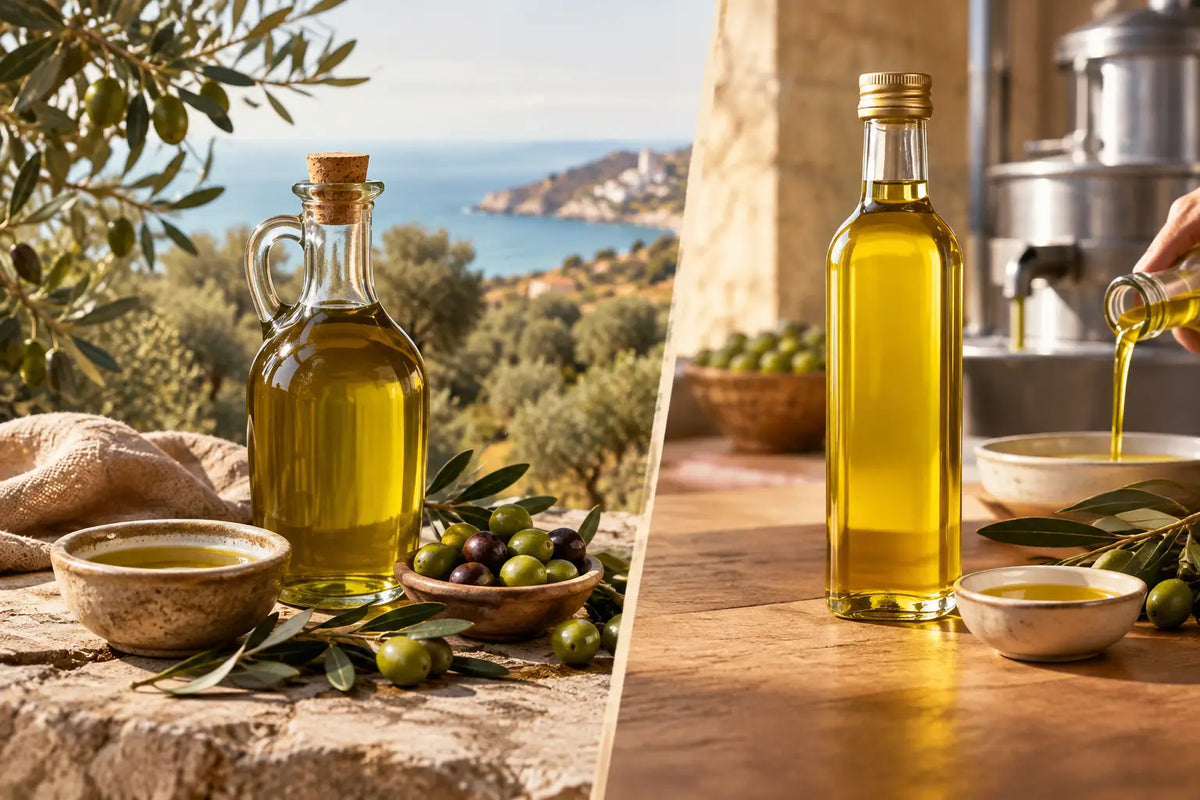
An oil that tastes like nothing is not neutral. It usually tells of a processing that removed everything that makes olive oil what it is. Therefore, the question of cold-pressed or refined olive oil is not about a label for connoisseurs. It is about origin, taste, nutrient profile, and what you are giving your food every day.
Cold-pressed or refined olive oil: the difference
Cold-pressed olive oil is mechanically extracted from olives, without high temperatures and without chemical treatment. In the European quality standard for extra virgin olive oil, the temperature during extraction must not exceed 27 degrees Celsius. Modern oil mills, strictly speaking, no longer press like they used to with heavy stone presses. They grind the olives, stir the paste in a controlled manner, and separate the oil by centrifuge. What matters is not the romantic press, but the gentle, clean processing.
Refined olive oil, on the other hand, often starts as an oil with sensory or chemical deficiencies. Perhaps the olives were stored too long, damaged, or the processing was too slow. Through refining, unwanted odors, flavors, and free fatty acids are reduced. For this, industrial processes such as heating, filtering, and deodorizing are used. The result is a light, mild oil with a long shelf life - but hardly any character.
Pure refined olive oil is rarely featured prominently on the shelf. More often, you find products labeled olive oil. They usually consist of refined olive oil and a smaller portion of virgin olive oil, which brings back some color and flavor. This is legal. It only becomes transparent when you really read the commercial designation, instead of letting yourself be guided by an Italian landscape on the label.
Extra virgin is more than cold-pressed
Cold-pressed sounds right. But that alone is not enough. An oil can be gently extracted and still come from overripe, poorly stored, or inferior olives. Then it lacks freshness, even if no high temperature was involved.
Extra virgin olive oil is the highest quality class. For this, the oil must meet analytical limit values and pass a sensory test. It must not show any off-notes such as rancid, musty, winey, or stinging. Its free acidity may be a maximum of 0.8 percent. A low acidity is not a taste promise in itself, but a strong indication that the olives were processed healthily.
Really good extra virgin olive oil begins long before the mill: with carefully harvested fruit, short distances, and processing directly after the harvest. Anyone who only advertises with terms like cold-pressed, pure, or extra virgin, but leaves out the harvest, variety, origin, and mill, does not deliver a whole story. And that is exactly where the crucial question begins.
What is lost during refining
Refining makes oil technically stable and taste predictable. But it also takes away the substances for which high-quality olive oil is so culinarily exciting. These include many polyphenols, natural flavorings, and part of the color. What remains is mainly fat with a neutral profile.
This does not mean that refined olive oil is fundamentally unusable. It fulfills a functional purpose if a completely subdued taste is desired or a cheap everyday oil is sought. However, anyone who consciously cooks with ingredients and wants to enjoy an oil raw pays for the removal of quality during refining.
Taste is not a luxury feature
A good fresh olive oil may be bitter. It may slightly scratch the throat. Neither of these are flaws, but can indicate fresh olives and natural polyphenols. Depending on the variety, ripeness, and harvest time, it tastes like green grass, tomato leaf, almond, artichoke, or herbs. Koroneiki olives often bring a clear green freshness, bitterness, and a peppery sharpness.
Many people consider a taste-neutral oil to be particularly high-quality because they have never experienced the typical bitterness. The industry has catered to this impression for a long time. But an olive oil that contributes nothing to warm bread, over tomatoes, or with beans is not a quiet companion. It is a missed ingredient.
For some dishes, oil should still not be dominant. With a fine vanilla cream or very mild fish, a gentler extra virgin olive oil may be more sensible than an intensely green-fruity one. Quality does not mean maximum sharpness in every bottle. Quality means that aroma, variety, and use consciously match.
Can you heat extra virgin olive oil?
Yes. The idea that high-quality olive oil may only be used cold persists stubbornly and is unnecessary. Extra virgin olive oil is excellent for frying, steaming, and baking - as long as the pan does not smoke continuously and the oil does not burn. Its smoke point depends on quality and composition, but typically lies in a range that is sufficient for most kitchen applications.
The smoke point is not the only deciding factor. A fresh oil contains natural antioxidants that can support its stability when heated. For vegetables, eggs, fish, pasta, oven dishes, and moderate frying, a good extra virgin olive oil is a strong choice. It adds flavor instead of burying the ingredients under a neutral layer of fat.
In very long, extremely hot frying, every oil is tested. Here, a refined oil may be suitable for purely practical reasons. But anyone who always reaches for refined olive oil out of fear of heat gives up aroma and quality in everyday life without necessity. The better rule is: control the pan, do not let the oil smoke, cook fresh.
How to recognize a good olive oil
The front of a bottle sells an atmosphere. The back should provide facts. Look for the clear designation Extra virgin olive oil and for a specifically named origin. A region, a variety, a harvest year, or at least a harvest period and information about the mill creates trust. Vague formulations such as from the EU or a blend of olive oils from different countries say above all that the supply chain can be long and interchangeable.
The packaging also counts. Light damages olive oil. Dark glass, an opaque can, or a protected squeeze bottle are more sensible than decorative clear glass on the windowsill. At home, the bottle belongs in a cool, dark cabinet - not directly next to the stove and not on the sunny countertop.
Also pay attention to freshness instead of a best-before date as far away as possible. Olive oil is fruit juice, not wine, which improves with years of storage. After opening, it should be used regularly. Anyone who cooks a lot often fares better with a larger, well-protected container and timely refilling than with a small bottle that gets old for months.
Three tests at the dinner table
You do not need a laboratory to recognize initial differences. First, smell it: fresh oil feels lively, green, fruity, or nutty - not waxy, musty, or like old nuts. Then try a small sip. If you feel bitterness on the tongue and a pleasant sharpness in the throat, that is a good sign for fresh oil.
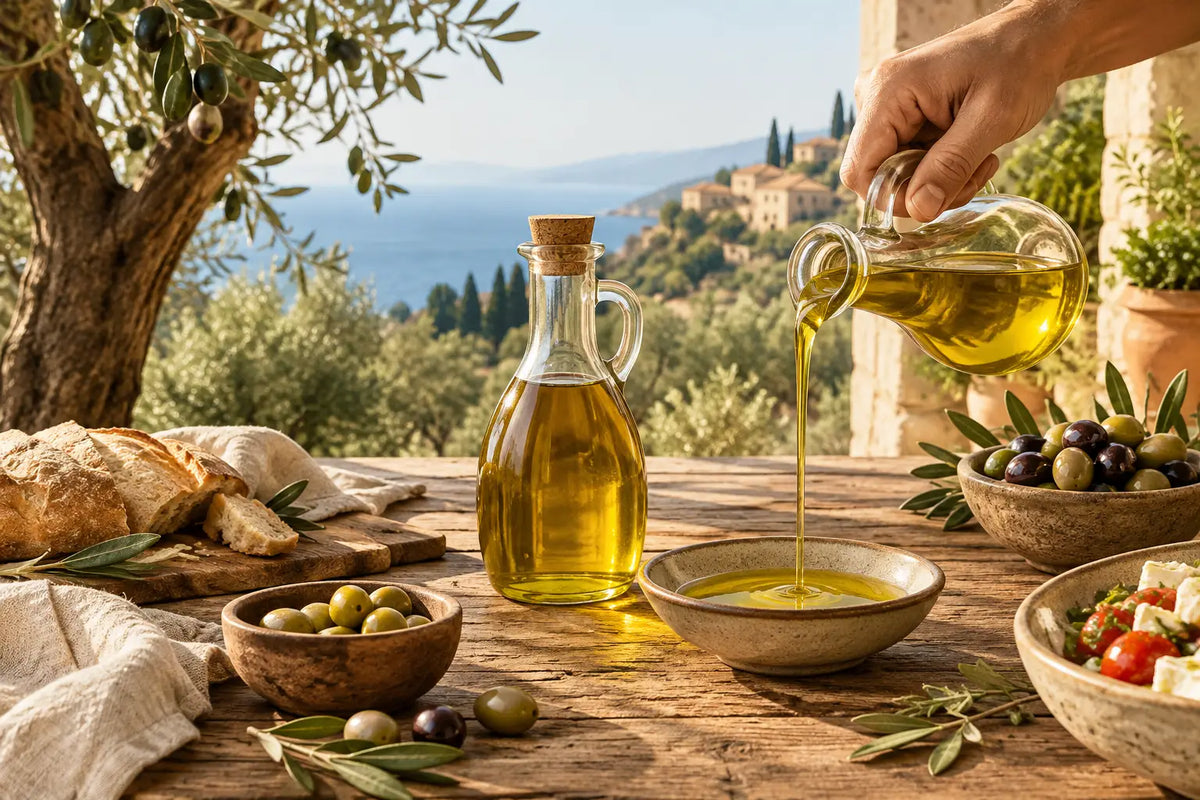
Finally, pour the oil over a simple ingredient: bread, potatoes, white beans, or a ripe tomato. A high-quality oil makes the dish more precise. An inferior one either disappears completely or brings a dull, greasy note.
Origin is the real quality question
Not every extra virgin olive oil is equally good, and not every beautiful bottle stands for craftsmanship. What matters are the people behind the harvest, the time between the tree and the mill, and the willingness to disclose this information. That is why at O.E.L. Berlin, Koroneiki olives from their own harvest and their own mill, traceable origin, and fresh batches are at the center. No anonymous blends, no smoke screens.
Anyone who consciously chooses olive oil is not just buying fat for frying. They are choosing a way of eating: more flavor, shorter distances in the supply chain, and respect for a product whose quality is decided in a few hours after the harvest.
The most helpful question on the shelf is therefore not only: cold-pressed or refined olive oil? Ask further: When were the olives harvested, where were they milled, and why does this oil taste exactly like this? If a manufacturer can answer clearly, you have probably found more than an oil. You have found an ingredient that makes your food better.

Leave a comment
All comments are moderated before being published.
This site is protected by hCaptcha and the hCaptcha Privacy Policy and Terms of Service apply.