


A beautiful glass bottle is not yet sustainable packaging. And a label with a green leaf is no substitute for an honest calculation. Reusable packaging can save resources—but only if the product, return logistics, and actual use all fit together. Especially with high-quality olive oil, the question is more complex than: glass or plastic?
Packaging does not just protect a product. It protects flavor, freshness, and the work of many people, from the harvest to the mill. If an oil loses its character prematurely due to light, heat, or oxygen, even the supposedly best packaging footprint won't help. Sustainability does not start with a symbol. It starts with a solution that works in everyday life.
What reusable packaging really needs to achieve
Reusable means: A package is not disposed of after one use, but returned, cleaned, inspected, and refilled. For this principle to make ecological sense, it needs a sufficient number of cycles. Every return shipment, every cleaning, and every quality control consumes energy, water, and organizational effort.
This is not an argument against reusables. It is an argument against simple claims. A heavy glass bottle can be a good solution if it reliably returns, stays in the system for a long time, and circulates regionally. If, on the other hand, it is sent back individually across Germany or ends up in the glass recycling bin after the first use, the concept loses its impact.
For beverages with established deposit systems, this is relatively well organized. For delicatessen products, oils, and specialties, it is more complex: the containers are more diverse, the quantities smaller, and the cleanliness requirements high. A reusable system must therefore not only sound appealing. It must be logistically robust.
Protection is part of the environmental footprint
Extra virgin olive oil is not a perishable mass-market product. Its valuable aromas and natural ingredients react to light, oxygen, and heat. Transparent bottles often look good on the shelf, but they let too much light reach the oil. This can compromise quality.
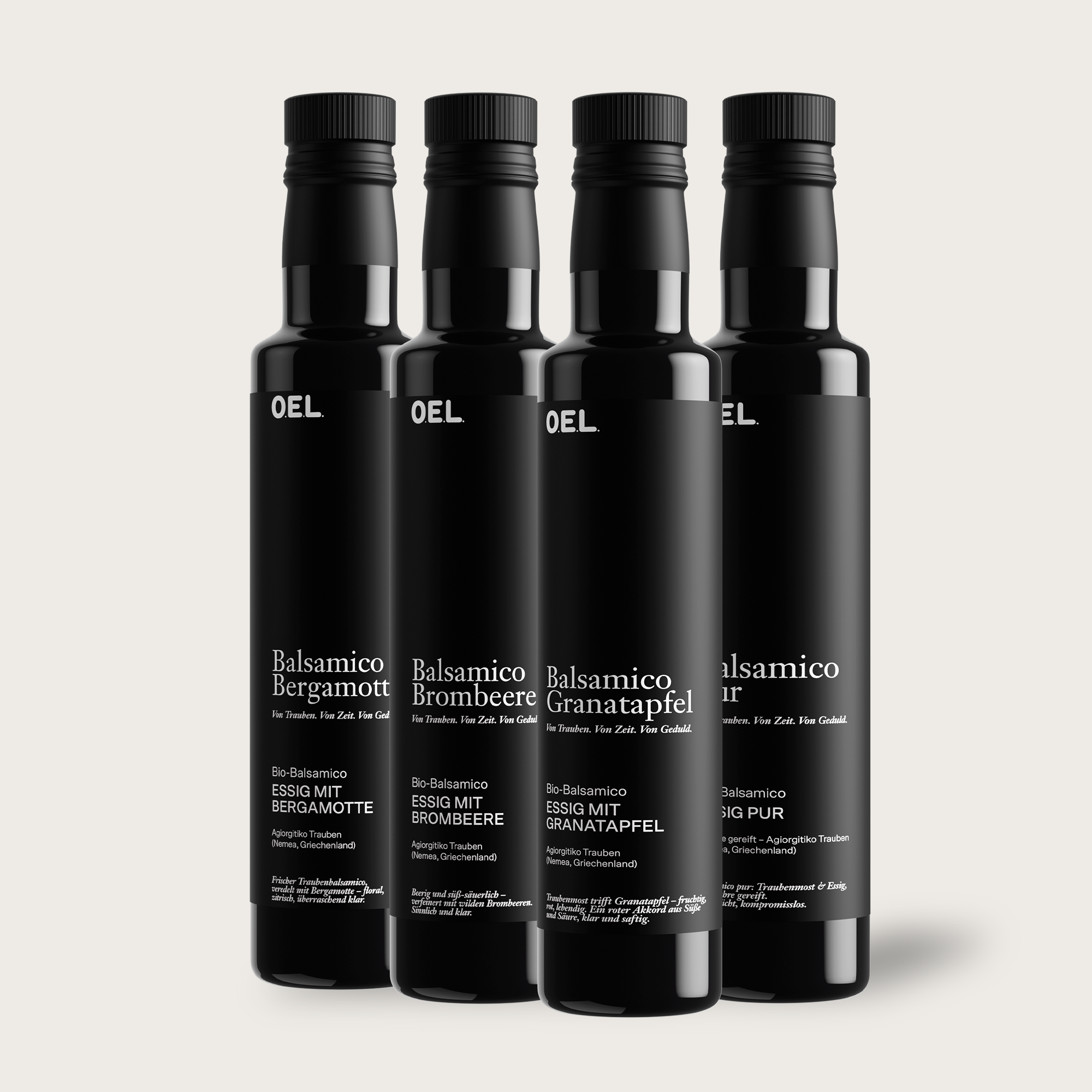
A suitable package must therefore protect above all. Dark glass, opaque containers, or well-designed refill formats can make sense if they seal tightly and allow for clean handling. Anyone who only evaluates the material and ignores product protection is calculating too narrowly. Wasted food is not a sustainable side effect, but an avoidable loss.
Reusable, refill, or recycling: Not everything is the same
Three things are often confused when talking about packaging. Reusable means a professional return and refilling system. Refill usually means that customers refill an existing container themselves. Recycling describes the processing of the material after its end as packaging.
All three approaches can make sense. But they solve different problems.
A true reusable system requires standardized containers, return points, or a reliable shipping process, cleaning, and inspection. This is complex, especially in direct-to-consumer retail. Refill, on the other hand, can save packaging material because a good primary bottle can be reused at home for a long time and larger refill sizes require fewer individual packages per liter. Recycling remains necessary when a container has reached the end of its life.
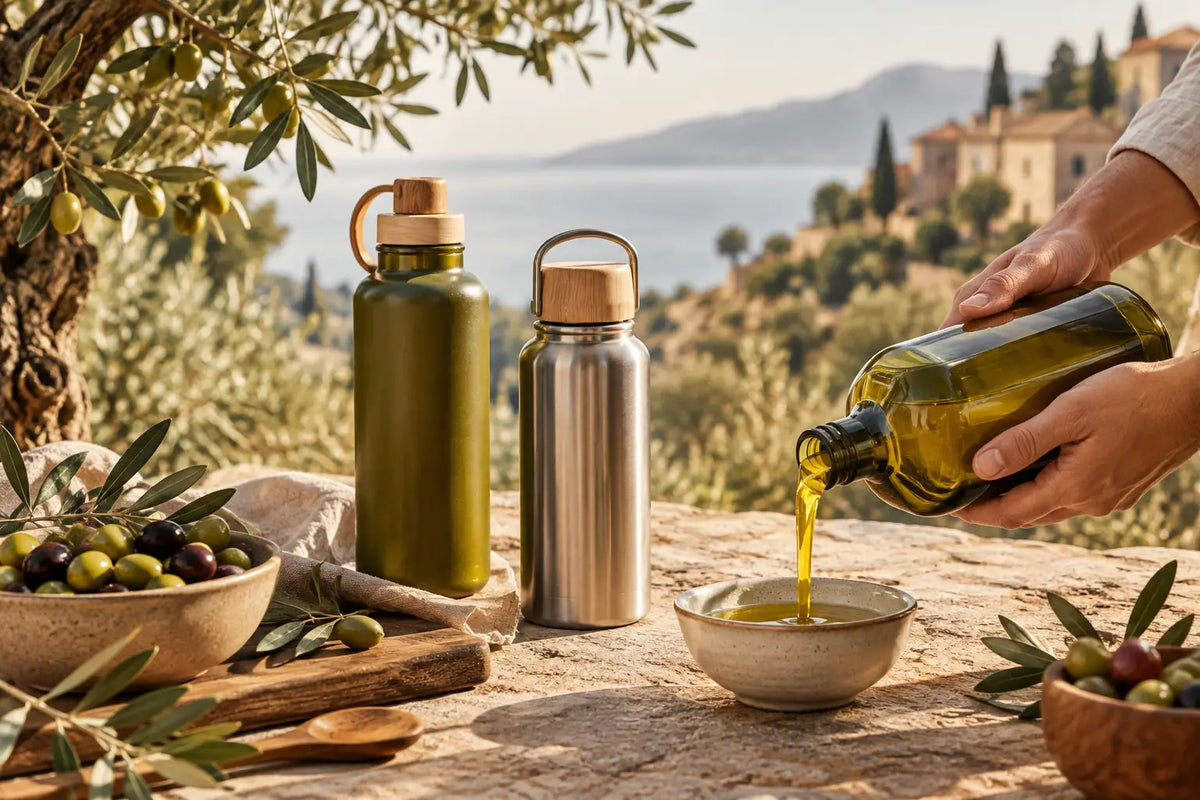
The honest answer is therefore: it depends. For a household's daily consumption, a high-quality, reusable pourer with a larger refill container can make a lot of sense. For a gift set or a specialty bought only occasionally, a return system can become disproportionate. Not every package has to do the same thing.
The best packaging is the one that is used
Many people buy olive oil in small bottles even though they cook with it regularly. This may seem convenient at first, but it creates more closures, labels, secondary packaging, and transport volume per liter. If you use your favorite oil often anyway, choosing a suitable larger size is often the clearer decision.
The key is balance: a container that is too large is also not a good idea if the oil stands open for months and loses its freshness. For a household that cooks daily, a larger refill size can be perfect. If you only occasionally dress a salad, you are better off with a smaller, light-protected bottle.
This is quality in practice, not packaging romanticism. Buy the quantity that you can enjoy within a reasonable timeframe. Store oil in the dark and not next to the stove. Close it after use. And only refill clean, completely dry containers.
Hygiene when refilling is not an afterthought
Reusing a bottle is easy. Reusing it cleanly requires attention. Oil residues become rancid over time, moisture can compromise quality, and an old pourer collects dust and kitchen grease. Before refilling, the container should be thoroughly cleaned and completely dried.
It is best to keep a bottle for one type of product. If you have previously stored aromatized oil, vinegar, or another liquid in it, you may alter the flavor of the fresh olive oil. The same standard applies to high-quality products as to cooking: good ingredients deserve clean tools.
Why returnable shipping is not automatically better
The idea is obvious: empty bottle back in the box, off to the brand, then refilled again. But this is exactly where practice makes the difference. Individual returns cause additional transport, packaging material, and sorting effort. If a container arrives damaged, its cycle ends prematurely.
A sensible returnable shipping system therefore needs a high return rate, stable standard containers, and bundled processes. It also needs clear incentives, such as a deposit or an easy return. Without these prerequisites, a good idea quickly becomes an elaborate gesture with limited impact.
For many delicatessen brands, it is more honest to first save material where it is immediately measurable: avoid unnecessary air in the package, use suitable shipping boxes, design primary packaging to be long-lasting, and offer refill options for regular buyers. That is why O.E.L. Berlin relies on larger containers and refill solutions for recurring enjoyment that can actually be used in a normal kitchen.
Questions that matter before buying
Anyone who wants to choose packaging consciously does not need to study a life cycle assessment. A few concrete questions are often more useful than a sustainability seal on the front:
- Is the container really used multiple times or just labeled as reusable?
- Does it reliably protect the food from light, air, and damage?
- Does the fill quantity match actual consumption?
- Is the return or refilling easy enough to become a habit?
- Are the origin, material, and system explained transparently?
Less packaging, more integrity
The best solution is rarely spectacular. It is a bottle that protects the oil. A size that matches consumption. A refill format that does not sit in the cupboard. And a brand that openly states where the limits of its system lie.
No corporate jargon, no greenwashing. Anyone who enjoys consciously may examine packaging critically—and at the same time expect that flavor, origin, and shelf life are taken seriously. With the next bottle, do not start by asking what looks best. Ask what you will really use up, keep clean and reuse, and enjoy with a clear conscience.


Leave a comment
All comments are moderated before being published.
This site is protected by hCaptcha and the hCaptcha Privacy Policy and Terms of Service apply.