
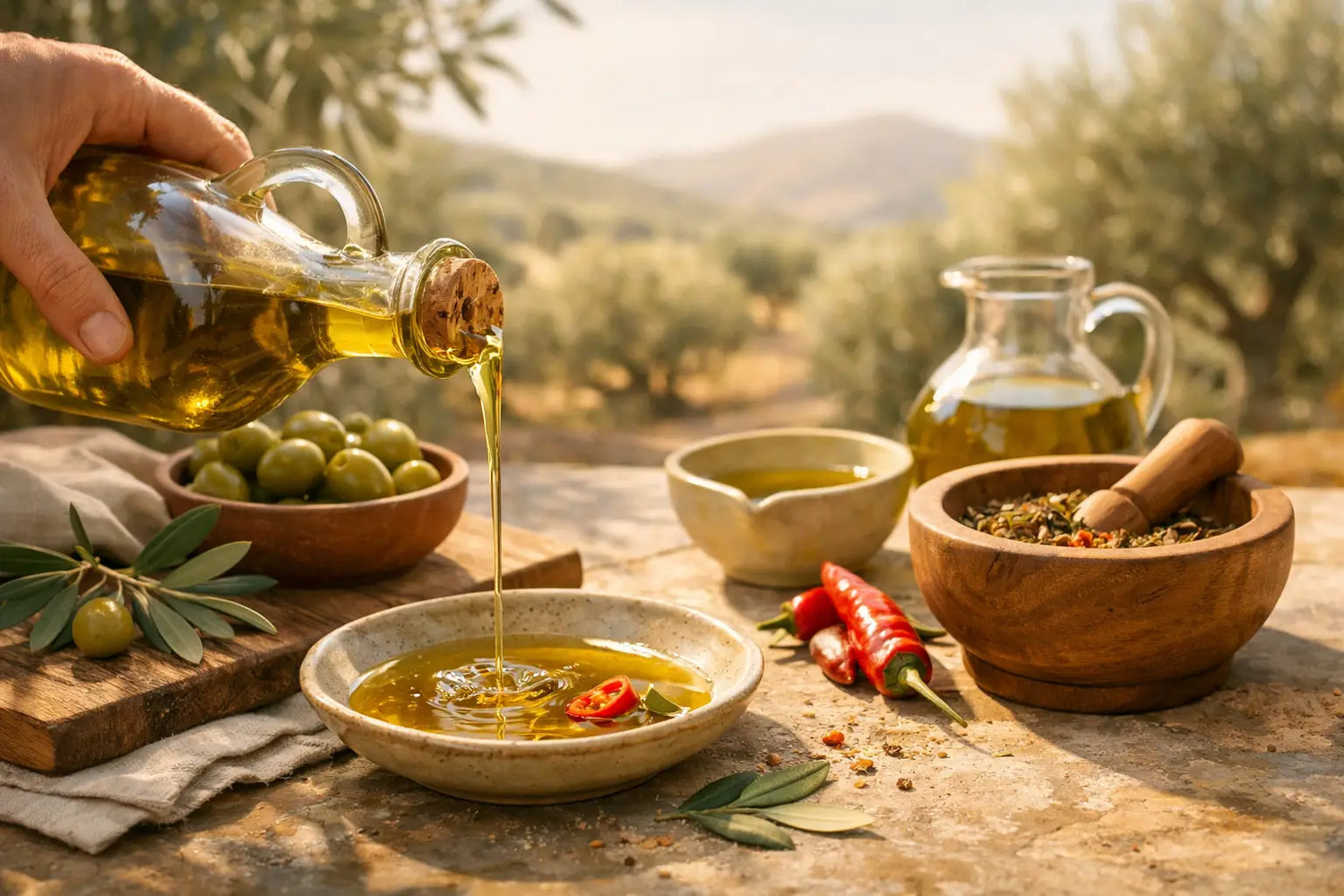
A slight irritation in the throat, sometimes a small cough reflex – and immediately the question: Is the oil too pungent? With truly fresh, high-quality olive oil, often the opposite is true. If you ask yourself, why does fresh olive oil taste pungent, you are usually experiencing a sign of freshness, careful processing, and valuable natural ingredients. Not every pungent oil is automatically good. But a good, fresh extra virgin olive oil may be bitter and have a peppery tingle on the finish.
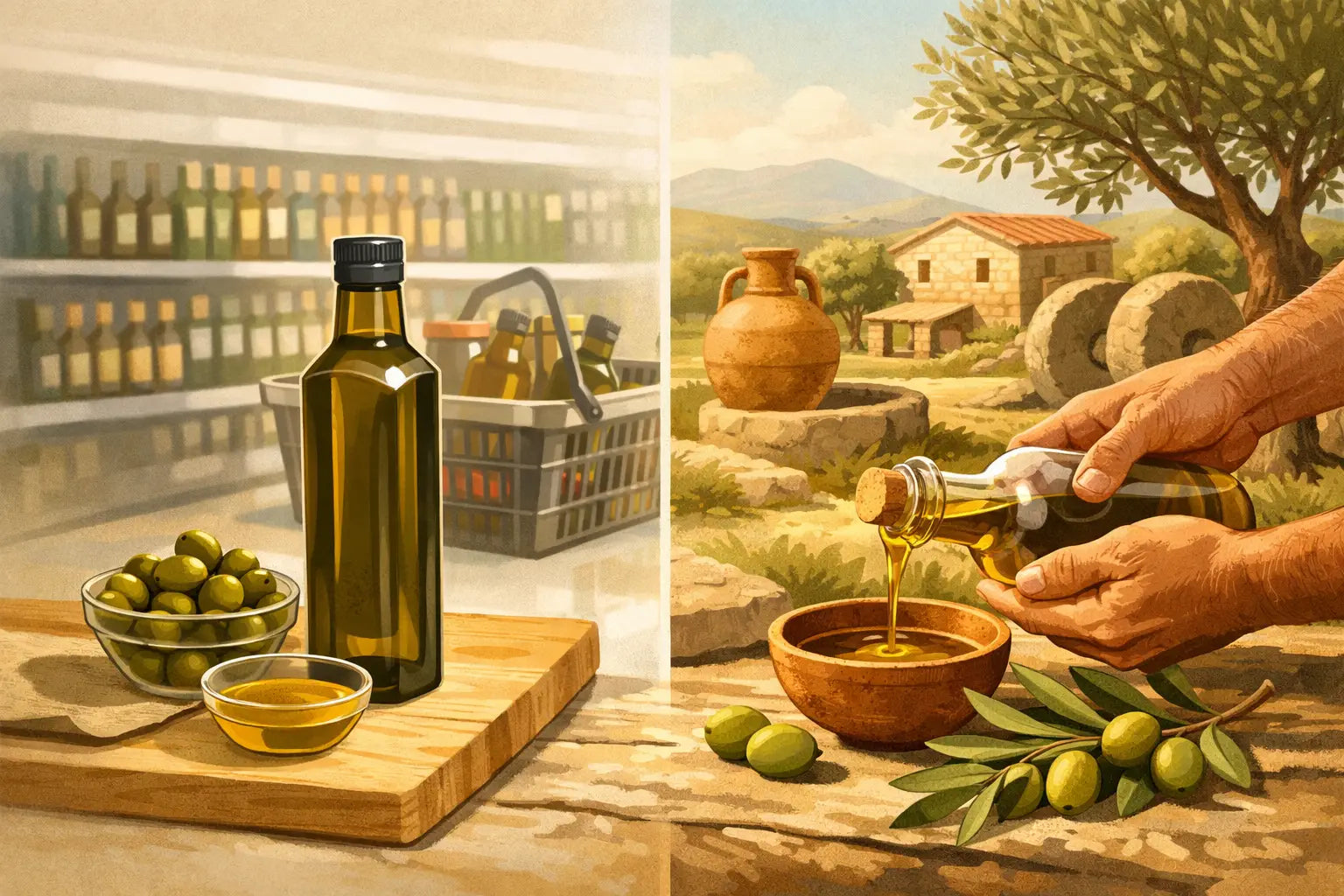
Supermarket oil has accustomed many people to neutrality. It should not stand out, not bother, not provoke discussion. High-quality olive oil, on the other hand, has character. It tastes of olives, green herbs, sometimes artichoke, tomato leaf, or freshly cut grass. And precisely this clear pungency that briefly lingers in the throat.
Why does fresh olive oil taste pungent?
The pungency is mainly due to polyphenols. These are natural plant compounds that protect the olive from oxidation and external influences. One of their most well-known representatives is oleocanthal. It can create a similar tingling sensation in the throat as certain pungent substances in other foods. This is where the typical coughing reflex during a small oil tasting comes from.
Polyphenols are not an added effect or a quirky flavor. They arise from the interplay of variety, ripeness, harvest time, and processing. If olives are harvested early, they are still green and firm. They yield less oil than very ripe fruits, but often contain more polyphenols and more pronounced green, bitter, and pungent notes. This is often where yield separates from aspiration.
Those who produce solely for quantity wait longer to harvest. Riper olives release more oil, but the profile usually becomes milder, and the fresh green tension decreases. This can be wonderful if a deliberately mild oil is desired. However, it is not proof of higher quality. Mild does not automatically mean better. Pungent also does not automatically mean too aggressive. Balance is crucial.
Bitter and pungent: two different signs of quality
Bitterness and pungency are often confused. Both belong to a fresh olive oil, but they tell a different story.
Bitterness is felt primarily on the tongue. Depending on the oil, it can be reminiscent of chicory, walnut, arugula, or artichoke. The pungency often develops only in the finish and is felt more in the throat. In a very young oil, it can be pronounced; in some varieties, even surprisingly powerful. Koroneiki olives, known for their concentrated and vibrant aroma profile, can bring exactly this peppery intensity.
A good oil combines these qualities with fruitiness. It may taste green, herbaceous, and decisive, but not scratchy, biting, or empty. If pungency merely burns and does not bring freshness, fruitiness, or length, a closer look is warranted. Sensory evaluation is not a point system with a single rule. It is the interplay of scent, taste, structure, and aftertaste.
Freshness is not created on the label
The pungency of an olive oil begins long before the bottle. Every hour counts between harvest and processing. Harvested olives are not a durable raw material that should wait for days. They must be quickly and cleanly brought to the mill so that they do not ferment, heat up, or lose quality.
There, the processing determines what remains in the oil. Clean machinery, controlled temperatures, and a short, precise malaxation help preserve aromas and natural ingredients. The designation "extra virgin" alone says too little about this. It is an important minimum standard, but not a complete origin story.
Therefore, an oil with aspirations requires concrete answers: Which variety was processed? When was it harvested? Where is the grove? How quickly did the olives get to the mill? Who pressed them? And how was the oil stored? Anonymous blends from changing countries of origin can rarely answer these questions credibly. Transparency is not decoration. It is a prerequisite for trust.
At O.E.L. Berlin, therefore, the traceable own harvest and processing of Koroneiki olives are central. Not because every bottle has to be as loud as possible, but because origin is palpable in the taste.
Pungency is not a defect – rancidity is
A common misconception is that if olive oil tastes pungent, it is spoiled. In fact, rancidity is something entirely different. Rancid oil can be reminiscent of old nuts, wax, cardboard, stale grease pans, or playdough. It appears dull and has nothing to do with the clear, peppery freshness of a young oil.
Unpleasant off-notes can also occur: musty-moldy from poorly stored olives, winey-vinegary from fermentation, or muddy if oil sits on deposits for too long. Such aromas do not disappear because an oil is marketed as "mild." They are quality defects.
Natural pungency, on the other hand, is clean and lively. It comes after the fruit, lingers briefly, and leaves the mouth feeling fresh. A small cough may be part of it. A burning, chemical-like sensation without aroma, however, is not.
How to properly taste olive oil
The color is not the best guide. Green glass protects better from light, but the oil color itself can be easily influenced and says little about quality. Rely on scent and taste.
Pour a small amount of oil into a small glass or cup. Warm it slightly with your hand and cover it for a moment. Then smell first. Don't desperately search for individual aromas, but pay attention to the overall impression: does the oil smell fresh, green, clear, and appetizing?
Then take a small sip and draw some air over the oil into your mouth. This distributes the aromas. Only then will you see if fruitiness, bitterness, and pungency harmonize. The pungency may appear in the throat. It doesn't have to please everyone, but it should be precise – not coarse.
What influences intensity
How pungent an olive oil tastes depends not only on its quality. The variety plays a major role, as do climate, soil, harvest year, and ripeness. A hot, dry year can produce a different aroma profile than a cooler year. This is not a weakness, but agriculture.
Usage also changes perception. Pure on warm sourdough bread, an intense oil seems more direct than in a stew. With tomatoes, beans, grilled vegetables, feta, fish, or a simple potato, the peppery freshness often tastes particularly good because it adds excitement to the dish. For baking or in very mild creams, a gentler oil might be the better choice.
Heating high-quality extra virgin olive oil is generally allowed. But the finest green and pungent nuances are best appreciated when you add it for seasoning, refining, and at the end over the food. This is not a rule against frying. It is an invitation not to degrade the oil to a mere source of fat.
What to look for when buying
If you are looking for a fresh, characterful oil, look beyond vague terms like "Mediterranean" or "fine." A good label should at least mention a verifiable origin, ideally variety and harvest period. A specific harvest date is more informative than a very long best-before date, because olive oil is not a wine that benefits indefinitely from aging.
Also pay attention to light-protected packaging and storage away from heat. At home, the oil belongs in a dark cupboard, not on the sunny windowsill and not directly next to the stove. Large containers are useful if you cook regularly and use them within a few months. Those who consume more slowly are better off with smaller bottles or a refill system.
Low free fatty acid content and lab values can provide valuable information. However, they do not replace taste and a traceable production history. Good quality is measurable – but it must also convince on the palate.
A fresh olive oil may briefly awaken you. Do not take this pungency as a warning signal, but as an invitation to taste more closely. When genuine origin follows green fruitiness, fine bitterness, and a clear peppery finish, a simple oil becomes an integral part of good food culture.


Leave a comment
All comments are moderated before being published.
This site is protected by hCaptcha and the hCaptcha Privacy Policy and Terms of Service apply.