
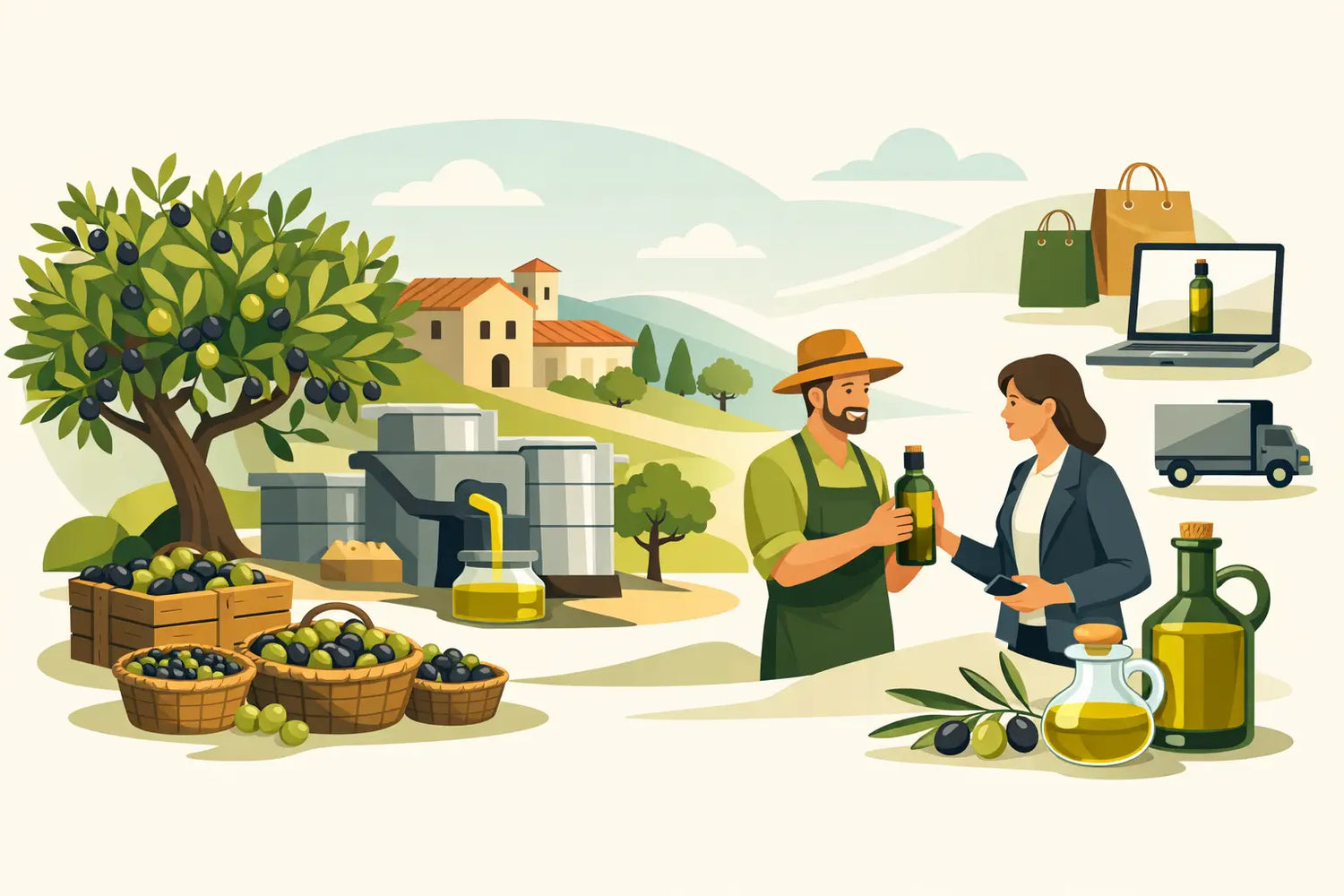
Anyone who has ever tasted truly fresh olive oil directly from the producer immediately recognizes the difference. Not just on the label, but in the nose, on the palate, in the aftertaste. There's no flat fattiness, no interchangeable supermarket profile, but character – green tomato, freshly cut grass, artichoke, sometimes almond, often a subtle bitterness and a peppery kick in the throat. That's where the real question begins: Are you buying an oil or an origin?
Why olive oil direct from the producer is more than just a selling point
The phrase initially suggests closeness and trust. But with olive oil, it's more than just marketing. When you buy directly from the producer, in the best case, you're buying a product with a clear identity: known olive variety, defined harvest, own mill or tightly controlled processing, traceable storage, and a supply chain with few breaks.
This is crucial because olive oil is not a durable industrial product without a time factor. Extra virgin olive oil thrives on freshness. The cleaner it's harvested, the faster it's milled, and the more carefully it's stored, the more precisely the aroma is preserved. Those who buy anonymously bottled mass-produced goods often get a blend of different origins and harvest times. This can be technically correct. Culinarily, it's usually insignificant.
Direct from the producer also means: responsibility is not outsourced. When a producer stands by their oil with their name, harvest, and mill, quality becomes tangible. No industry. No tricks. No compromises. That's precisely what makes the difference between an interchangeable cooking oil and a food with a signature.
How to recognize high-quality olive oil directly from the producer
Not every direct sale is automatically good. Even small suppliers can sell mediocre goods. The crucial factor is whether transparency is backed up with reliable information.
A good producer names the olive variety. Koroneiki, for example, often stands for intense, fresh, polyphenol-rich oils with structure and length. The region should also be clearly named, not just the country. There's a world of difference between "from the EU" and a specific origin from a particular growing area.
Equally important is the harvest. When were the olives harvested? Early-harvested fruits usually yield less quantity, but more aromatic density, more bitterness, more pungency, and often higher polyphenol levels. Late harvests taste milder but can lose vibrancy. What's better depends on the application. For many sophisticated kitchens, a fresh, vibrant oil is the more interesting choice.
Then the mill comes into play. How quickly were the olives processed after harvesting? Hours matter. Good producers talk openly about this. Because damaged or overly stored olives lose quality even before oil is extracted.
Lab values are also not a minor issue. A low acidity level is a quality indicator, though not the only one. Polyphenols, peroxide value, and sensory classification are also interesting. Those who only show beautiful pictures but provide no facts often sell atmosphere rather than substance.
Taste is no accident
For years, many consumers have been conditioned to mild, almost flavorless oils. The problem: mild is often mistaken for good. However, bitterness and pungency in fresh extra virgin olive oil are not flaws, but desired characteristics. They indicate phenolic compounds and thus often freshness, stability, and complexity.
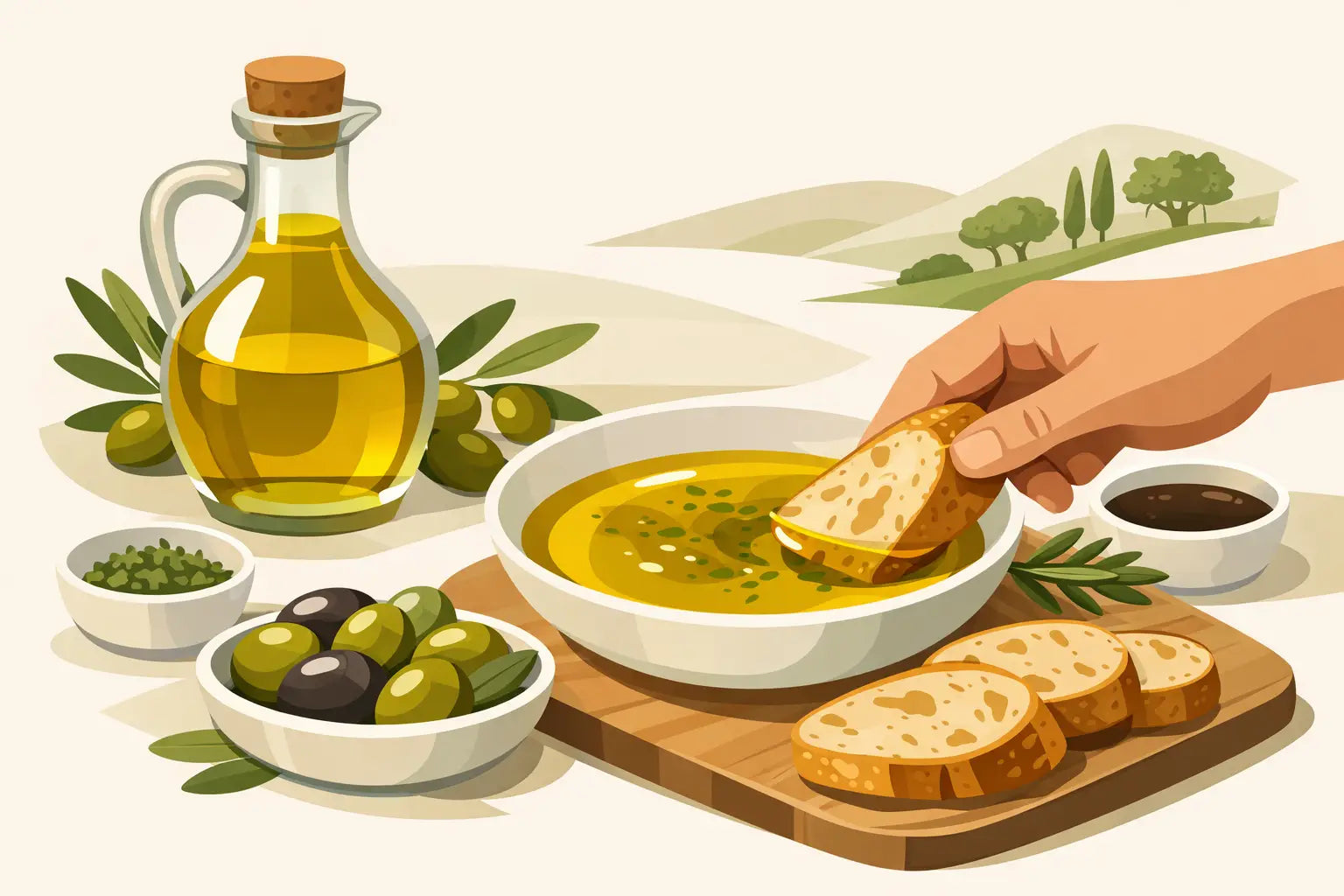
Of course, the same applies here: it depends. A very intense oil is great on tomato salad, beans, grilled vegetables, or simply on warm sourdough bread. For a fine mayonnaise or a subtle fish dish, a more balanced profile might be more suitable. Quality doesn't always mean maximally loud. Quality means precise, clean, and harmonious.
When buying olive oil directly from the producer, you should therefore not only look for "extra virgin" but also for a sensory description that makes you want to use it in specific ways. Good producers speak not in platitudes, but in aromas. They say whether an oil is grassy, spicy, herbaceous, or almondy. And they explain what it pairs well with.
Transparency trumps label romanticism
Beautiful cans, Mediterranean images, and terms like traditional or family are quickly told. The crucial question is: Is the oil truly traceable?
Traceability doesn't just mean that a country of origin is mentioned. It means that the harvest, mill, batch, and bottling match. Ideally, the oil comes from the producer's own harvest and processing, or from such a close structure that every batch is clearly traceable. That's where trust is built, which is worth more than any advertising slogan.
For discerning buyers, this is not pedantry, but reasonable quality control. Those willing to pay more for good olive oil want to know what's in the container. Not approximately, but precisely.
The price - and why cheap is almost never a bargain
Olive oil directly from the producer often costs more than a promotional oil from the supermarket. There are reasons for this. Careful harvesting, quick processing, low yields from early harvests, clean storage, controlled bottling, and direct shipping all cost money.
Cheap olive oil is rarely a bargain. If an oil costs astonishingly little despite elaborate cultivation, milling, transport, and trade, savings were made somewhere. Often on the raw material, on freshness, or on care. The result is an oil that provides fat but little culinary added value.
Those who buy high-quality olive oil don't just buy calories. They buy taste, structure, and reliability in cooking. A good oil elevates a simple baked potato, a bowl of white beans, or roasted vegetables to another level. Especially in reduced cooking, quality is immediately noticeable.
How to properly use good olive oil in everyday life
A common misconception is that particularly good oil is too precious for raw use. This is only partially true. Yes, a characterful oil reveals its finest notes particularly clearly when pure. But good olive oil can and should be cooked with, if it suits the cuisine.
The application is crucial. For finishing, dressings, burrata, hummus, or grilled vegetables, a fresh, aromatic oil is particularly worthwhile. When gently frying, high-quality oil also demonstrates its stability and flavor. Only at very high heat or during long deep-frying processes must one weigh whether the sensory added value justifies its use.
Anyone who has once eaten lentils, roasted pumpkin, or simple pasta with garlic and good oil quickly understands: a strong olive oil is not just one ingredient among many. It is often the flavor conductor.
Buying olive oil directly from the producer online - what matters
Online shopping is no longer a disadvantage. On the contrary: direct sales can even shorten the distance between producer and kitchen if storage, bottling, and shipping are well organized. It is important that the provider not only sells but also explains.
Pay attention to specific details about the harvest, variety, region, and processing. Check if container sizes are thoughtfully designed. Those who cook regularly with olive oil often fare better with larger formats, as long as the oil remains protected from light and well sealed. Refill solutions can be useful if they improve freshness and handling rather than just claiming sustainability.
Packaging also deserves attention. Dark glass or protective metal containers are more sensible than transparent bottles that allow light to pass through. And yes, modern formats like an easily dispensable squeeze bottle can make a real difference in everyday life – not as a gimmick, but because they allow good oil to be precisely applied where you want to work quickly and cleanly.
Who particularly benefits from direct purchase
Not everyone needs a top-quality oil with a clear origin. Those who use olive oil only incidentally may hardly appreciate the difference. But for people who cook, season, compare, and take enjoyment seriously, direct purchase is almost always worthwhile.
It pays off for households that prefer to buy less, but better. For all who want to know where their food comes from. For hobby cooks who have understood that good products are not decoration, but the foundation. And for all who are tired of anonymous blends that look the same every year and never tell a story.
This is precisely where O.E.L. Berlin comes in: with clearly declared origin, its own harvest and mill, a sensorially precise organic olive oil, and the stance that transparency is not a nice accessory, but a duty.
What truly matters in the end
Good olive oil is recognized not by grand promises, but by small certainties. By a named variety. By a dated harvest. By a mill that is not kept secret. By a taste that has character and backbone.
When you buy olive oil directly from the producer, in the best case, you are not buying an off-the-shelf product, but a decision against arbitrariness. And that's precisely what you can taste – every day, not just on the first try.

Leave a comment
All comments are moderated before being published.
This site is protected by hCaptcha and the hCaptcha Privacy Policy and Terms of Service apply.