
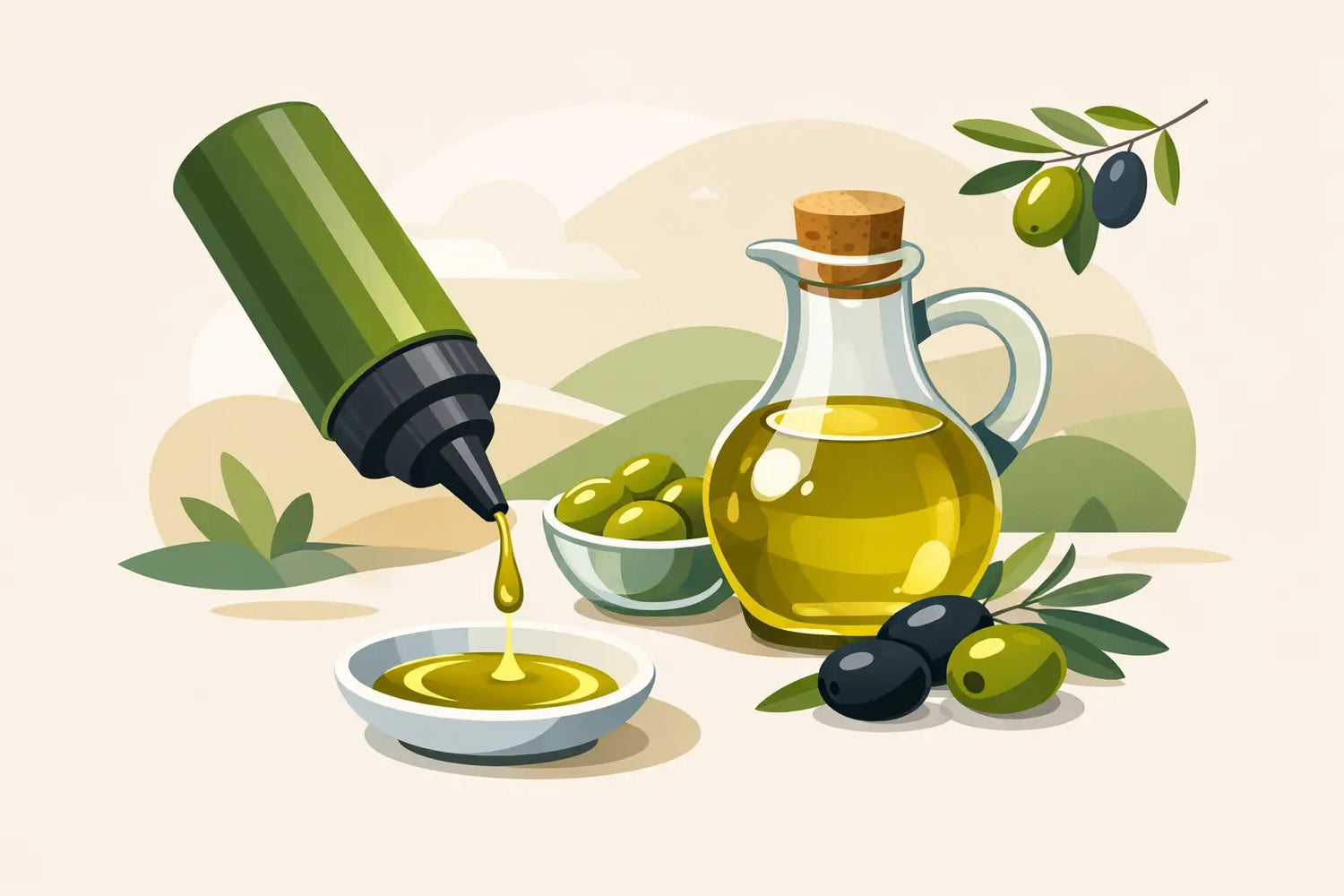
Anyone who has ever dispensed olive oil over hot vegetables, toasted bread, or a pan of fish with a good squeeze bottle immediately notices the difference. Not in image, but in handling. Less mess, more precise dosing, faster work. So the real question isn't whether it's practical. The question is whether the packaging matches the oil's quality.
Especially with olive oil, there's a lot of talk about harvest, acidity levels, and polyphenols—and rightly so. But in everyday life, the bottle often determines how often an oil is truly used, how clean it stays, and how controlled it can be applied in the kitchen. A bad bottle can make a very good oil unnecessarily cumbersome. A good bottle can make a high-quality oil more accessible without diluting its standards.
What makes a squeeze bottle better for olive oil
The biggest advantage lies in dosing. Those who cook regularly don't want to handle heavy glass every time and then hope that instead of a thin stream, not half a gush ends up in the pan. A soft bottle with a clean spout provides more control. This isn't a detail; it's everyday usability.
This is particularly important when searing, marinating, and finishing. In the pan, speed counts. On a plate, precision counts. And for salads, you don't want to end up between too little and far too much oil. A squeeze bottle achieves exactly this balance. It doesn't make good olive oil indiscriminate, but rather more usable.
Then there's cleanliness. Many classic glass bottles look nice, but quickly become oily on the outside. This is annoying on open shelves, on light countertops, and especially when you grab the bottle with wet or greasy hands. A functionally designed squeeze bottle is often clearly superior here. Fewer drips at the neck, less residue, less kitchen chaos.
Squeeze bottle olive oil is not automatically better
Practical doesn't automatically mean high-quality. This is where it gets interesting. Because the packaging form says nothing about the content initially. A squeeze bottle can be filled with excellent organic extra virgin olive oil—or with anonymous mass-produced goods that are only supposed to look modern.
Therefore, the decision should never be based solely on feel. With olive oil, what's in the bottle matters most. Where do the olives come from? When were they harvested? Was the oil processed in the producer's own mill or pushed through several anonymous stations? Are there clear details about the variety, origin, freshness, and analysis values? Those who don't answer these questions often sell primarily packaging.
This is the core: A squeeze bottle is useful when it serves a truly good oil. Not when it replaces quality.
What really matters about the bottle
Not every squeeze bottle is equally suitable for olive oil. Material, light protection, and closure make a difference. Olive oil is sensitive to light, heat, and oxygen. So, packaging must not only be convenient but also protective.
Ideally, a bottle that is easy to dispense in everyday life and at the same time protects the content from unnecessary exposure. A cleanly sealing spout helps because it reduces air contact and prevents the oil from oxidizing at the bottle neck. Storage also remains important. Even the best squeeze bottle doesn't belong directly next to the stove if heat is constantly rising there.
Those who buy high-quality olive oil should therefore not only look at the format but at the interplay of product and packaging. Good producers consider both together. They choose the bottle not for its look, but for its use.
For which applications the format is particularly worthwhile
A squeeze bottle excels wherever precision and speed come together. In warm kitchens, it is simply pleasant for sautéing vegetables, finishing pasta, or lightly oiling a grill pan. You work more smoothly, more directly, and usually more economically.
The format can also be useful at the table if you use olive oil consciously instead of pouring it indiscriminately. A few drops on burrata, tomatoes, beans, or grilled fennel are often completely sufficient. If you use a strong-character oil, you don't need half a cup. Good quality has an effect even in small amounts.
A squeeze bottle is less suitable for people who serve olive oil almost exclusively cold in bowls and appreciate the classic appearance of a glass bottle. This is not a mistake. It is simply a different use. Not every kitchen needs the same solution.
The difference between a kitchen tool and a marketing gimmick
There are products that want to appear modern but offer no real improvement. With squeeze bottle olive oil, the line is relatively clear. If the format is used to simplify everyday life, it makes sense. If it is only chosen to make an ordinary oil look younger, smarter, or trendier, little remains in the end.
Especially in the premium sector, one should be critical. Those who take origin seriously should also be honest about packaging. No tricks. No smoke and mirrors in a fancy outfit. No empty lifestyle promises. If a manufacturer talks a lot about design but little about harvest, variety, and mill, one should look closely.
A good oil needs no masquerade. It can be practically packaged, yes. But it must first convince sensorially—fruity, lively, clear, with structure, freshness, and a bitterness and pungency that do not detract, but show quality.
Does a squeeze bottle suit premium olive oil?
Yes, if it's well-conceived. Many people still automatically associate premium olive oil with heavy glass and a classic aesthetic. This looks valuable, but it's not the best solution in every kitchen. Those who cook almost daily need not only a beautiful product but a reliable tool.
This is where the modern format can truly shine. It brings a high-quality oil from the display case into everyday use. This isn't a stylistic break, but at best, a testament to quality. Because an excellent olive oil shouldn't be reserved only for special evenings. It should be used often—on roasted vegetables, fish, legumes, eggs, salads, and simply on good bread.
When the barrier to use decreases, appreciation usually increases as well. You taste more consciously, dose more precisely, and quickly realize how much a truly fresh extra virgin olive oil can enhance a dish. That's why O.E.L. Berlin also focuses on formats that not only look good but also stand up to everyday use.
What quality-conscious buyers should check
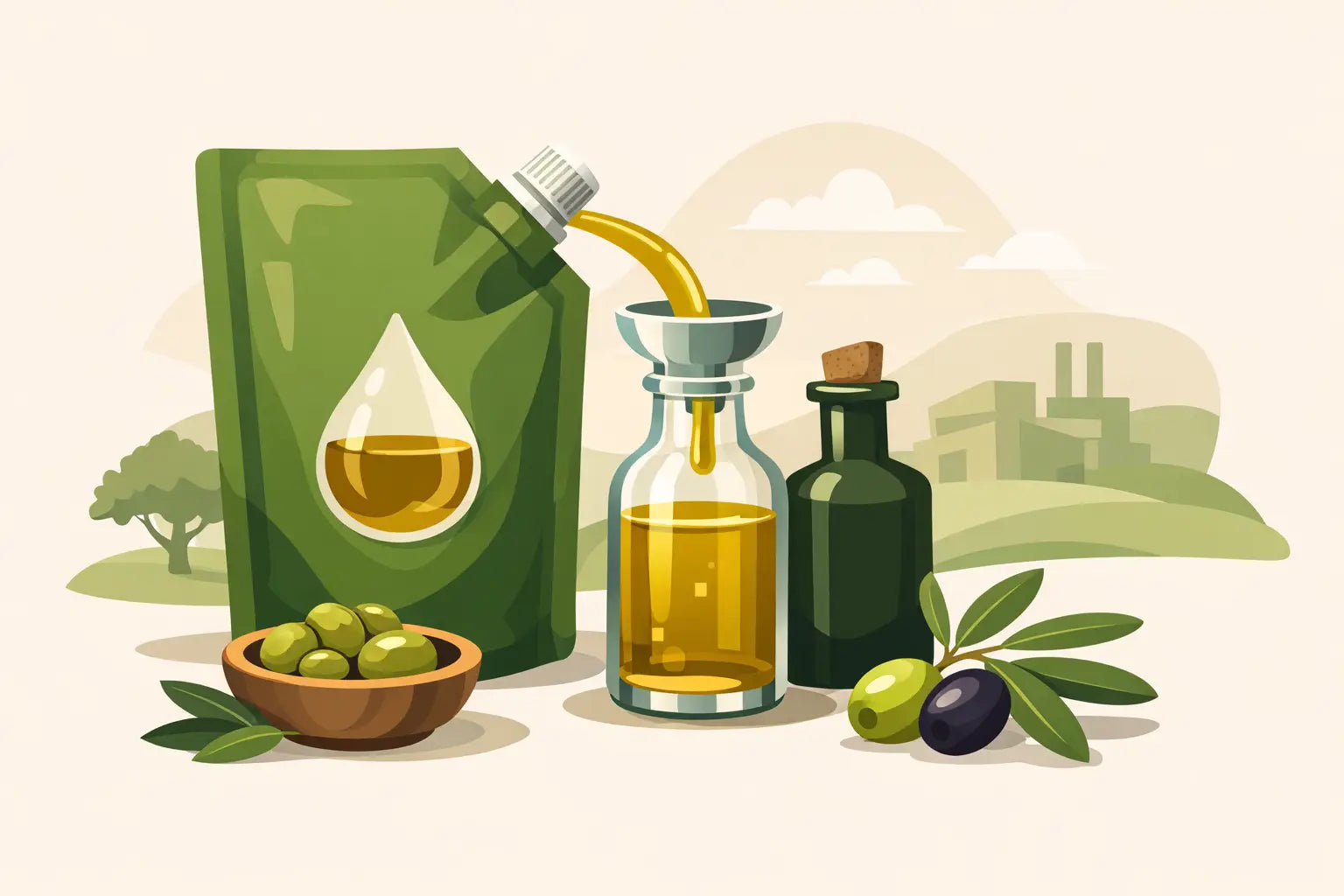
When buying a squeeze bottle, one should not first ask if it is convenient, but whether the oil inside has a provenance. Good indicators are a clearly named olive variety, a specific growing region, verifiable harvest data, and transparency about processing and bottling. Fresh delivery capability and larger refill solutions are also not secondary issues. They show that someone is not just selling attractive initial packaging, but thinking about actual use.
Sensory inspection is also worthwhile. High-quality olive oil doesn't smell flat or taste bland. It can be green, herbaceous, nutty, or peppery. It can have bitterness and a slight pungency. What many know from the supermarket—dull, greasy, interchangeable—is not a sign of quality, but often the opposite.
The best squeeze bottle is of little use if the oil is tired. Conversely, a truly good oil in an everyday format can gain enormously.
Is switching from glass to a squeeze bottle worth it?
That depends on how you use olive oil. If you rarely cook and a bottle is primarily decorative on the table, the advantage is smaller. However, if you work with olive oil regularly, you'll notice the difference quickly. Less spilling, a better feel for quantities, cleaner handling. This may sound unspectacular, but it changes your routine.
More precise dosing can also make economic sense. If you buy high-quality oil, you don't want to accidentally waste it. Especially with characterful oils, less is often enough because the flavor is more present. A good bottle helps to practically leverage this level.
The decisive factor remains: the format is not a substitute for quality. It is an enhancer. With good oil, it makes everyday life better. With bad oil, it only makes the problem more convenient.
Those who shop consciously should be guided by both—by taste and by use. The best bottle, in the end, is the one that ensures excellent olive oil is not spared, but used with joy.

Leave a comment
All comments are moderated before being published.
This site is protected by hCaptcha and the hCaptcha Privacy Policy and Terms of Service apply.