

Nur noch euer Olivenöl 🤩
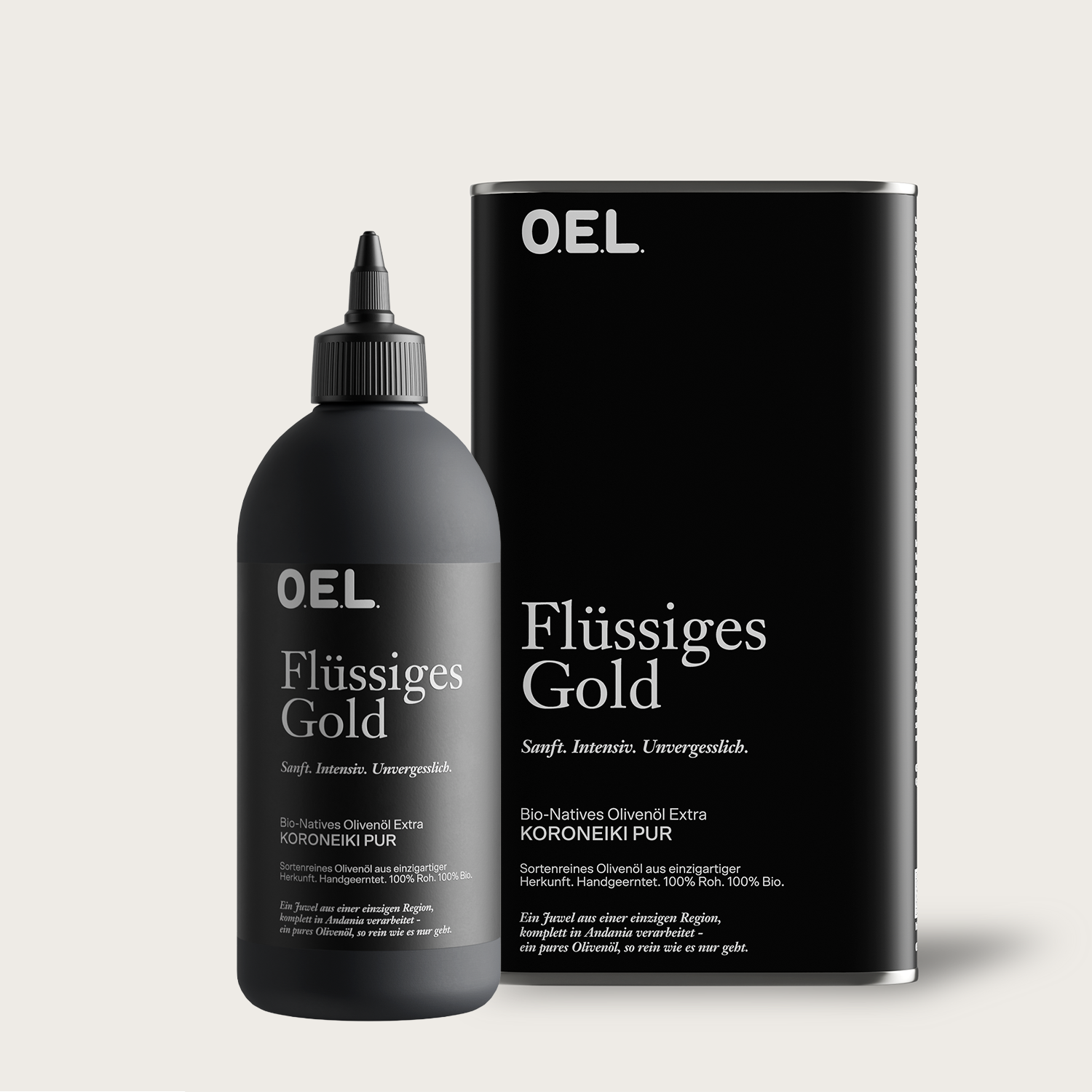
Flüssiges Gold 0,5 l Glasflasche - Bio Natives Olivenöl Extra


Tax included. Shipping calculated at checkout

HARVEST 12/2025 · Organic · First Class · Now also in a Squeeze Bottle
Drizzle it, dip it, love it.
Our vintage oil from Greece now comes in a practical squeeze bottle – perfect for refining your salads, pasta, dips, and everything that deserves an upgrade.
➤ 100% Koroneiki – single varietal, intense & complex
➤ Organic certified & hand-harvested in Andania, Peloponnese
➤ Cold extracted below 27°C, directly after harvest
➤ Acidity below 0.5% – premium quality
➤ Taste: freshly cut grass, green nuts, citrus notes
➤ Unfiltered & naturally cloudy, bottled in small batches
Behind "Liquid Gold" is our partner Ilias – organic farmer and olive oil pioneer with his own oil mill. For over 30 years, he has been producing extra-class olive oil in his village of Andania with great dedication. No monoculture, no compromises – just pure olive oil harvested by hand, in harmony with nature.
ideal for the kitchen, for cooks, for everyone who not only appreciates good olive oil but also uses it daily.
GR-BIO-01

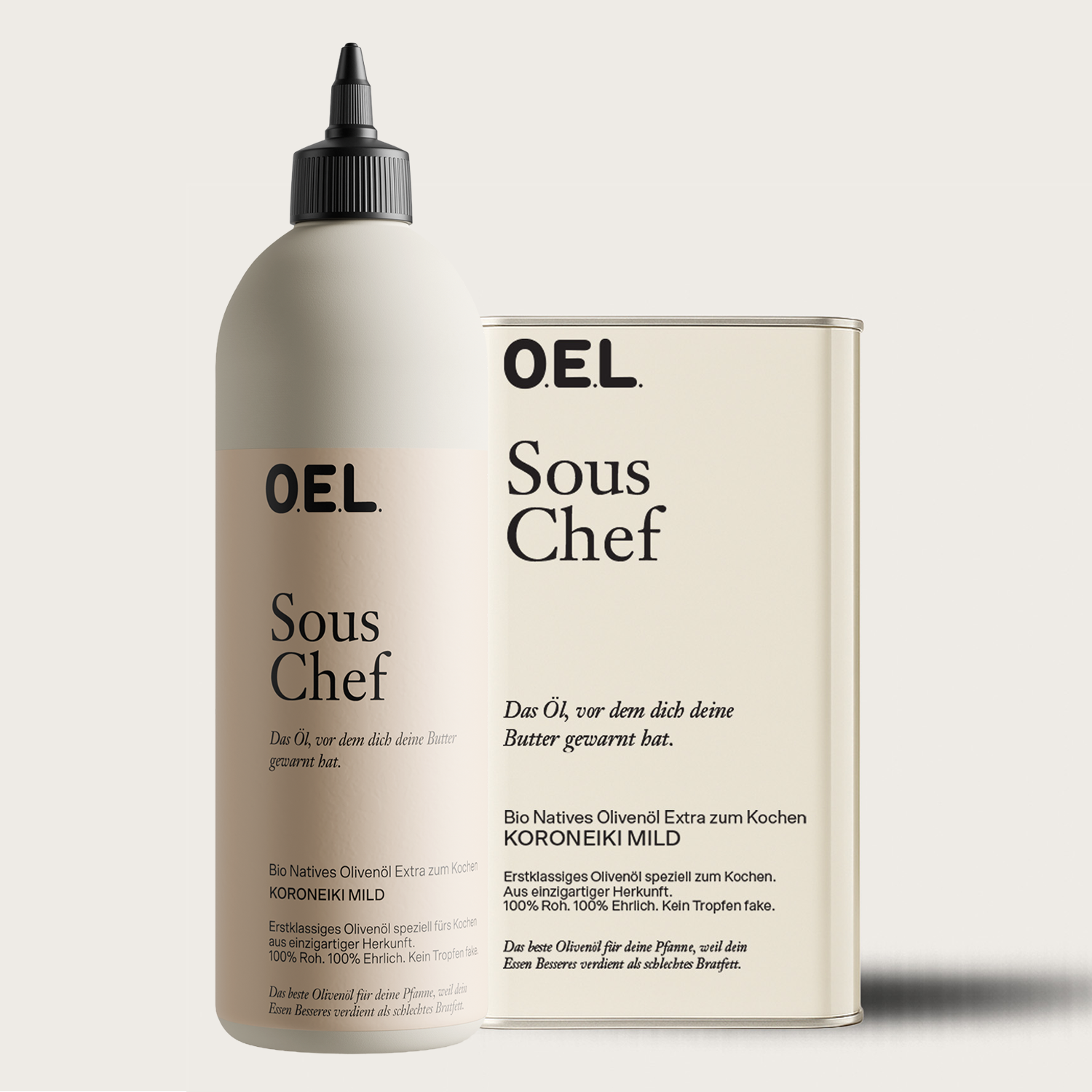
FOR COOKING & FRYING
Mild and balanced – for roasting, frying, pasta, and everyday cooking. An oil you won't ration.

FOR REFINING
Intense, peppery, raw over the finished dish – for refinements, dressings and drizzles. The final touch that makes all the difference.
Every harvest is independently lab-analyzed—and we publish the results. Origin, vintage, mill: everything documented.
View Lab Analyses










Hi, we're Simo & Clara.
O.E.L. was not born from a marketing concept, but from a very simple feeling:
We wanted to offer olive oil in a way that we would use it ourselves – honest, traceable, and without shortcuts.
We know that olive oil is polarizing.
Many of you have your own oil from Italy, Greece, or Spain – others only know olive oil from the supermarket. Both are realities.
Our goal is not to say: "Only we make good oil."
Our goal is to show how ours is made:
one region, one harvest, one mill, current laboratory analyses – and nothing that needs explaining because it was hidden.
If you have questions, doubts, or are critical: that's good.
That's exactly why we've laid everything bare.
Thank you for taking the time to look closer.
— Simo & Clara
Overall rating: 4.9 / 5 from 1555 reviews.
Nur noch euer Olivenöl 🤩
Flüssiges Gold 0,5 l Glasflasche - Bio Natives Olivenöl Extra

Dankeschön es ist ein klasse öl , habe schonviel probiert aber das ist das beste.

Das 9st ein sehr gutes Öl mit dem es noch mehr Spaß macht, zu kochen ...

Das ist die beste Tapenade ever. Frisches Brot und noch ein paar von den Olivenflocken dazu - köstlich!

Es ist gut aber überzeugt mich ganz so wie die anderen Produkte…

Die Paprika ist sehr köstlich und ich liebe es da es in dem tollen Öl eingelegt ist und nicht wie fast alles auf dem Markt in ungesunden Saaten Olen. Von mir volle Punktzahl. Habe auch schon eure Produkte verschenkt und es ist super angekommen 👍

Herrlich in jedem Sommersalat oder kalten Suppen. Ich habe eine wunderbare kalte rote Beete Suppe gemacht und mit eurem Olivenöl getoppt. Das war wirklich richtig gut!
Flüssiges Gold 0,5 l Glasflasche - Bio Natives Olivenöl Extra

Auch im Urlaub an der Ostsee dabei🥰 mild im Geschmack,Ausgießer top um vernünftig zu dosieren,so schmeckt es einfach noch besser.

Der perfekte Küchenbegleiter! Wir schwören auf das Öl als perfektes Topping oder als perfekte Bratgrundlage.

Auch der Hund bekommt morgens und abends seine Portion ins frisch gekochte Essen....gut fürs Fell

Öl ist mit im Kuchen 🎂....die Paste ist leider schon alle...hat nicht mal ne Woche gehalten...sooooo lecker

Super im Geschmack und ist täglich im Einsatz.
Bio Natives Olivenöl Extra aus Griechenland 500 ml (mit optischem Mangel)

Wir sind total zufrieden. Geschmacklich sehr gut. Preis/Leistungsverhältnis ebenfalls. Und mit Bioqualität hat man auch ein gutes Gefühl.

Das Öl ist mit Abstand das beste, das ich je genießen durfte. Auf einem frischen Baguette mit etwas Meersalz und Pfeffer, himmlisch!

Alles mit Euren tollen Olivenöl!!! Es schmeckt hervorragend und wir benutzen es schon das 4. Jahr.👍✨ Wir lieben es!

Zum Kochen das Beste!

Ein Genuss der Extraklasse ist dieses naturtrübe Olivenöl und ein Muss es an jedem Tag zu verkosten. Kann es mit gutem Gewissen weiterempfehlen.

Super Salze zum grillen und kochen!

Sehr lecker 👍…. Werde es wieder bestellen

Sehr tolles und feines Aroma. Ich Liebe es und werde es immer wieder gerne weiter empfehlen.

Nicht nur auf Focaccia und Pizza unsere erste Wahl - einfach unsere Lieblings-Oliven!

Leckerstes Olivenöl, dzu ein paar Oliven, Zwiebeln, Tomaten, Knoblauch, frische Kräuter und ein paar feine Spaghetti oder Spaghettini - viel mehr braucht man nicht...

Wer als Single alle 3 Monate 3-4 Liter des Olivenöls verbraucht ist der schon süchtig nach eurem Olivenöl oder ist das noch Normal ? :-) Seit ich vor 4 Jahren das Olivelöl über Spicebar entdeckt habe gibt es kein anderes mehr :-) Viele GRüße

Besser geht’s nicht…..das Olivenöl ist gigantisch lecker!

Sehr aromatisch und lecker!!!!

Sehr lecker

Einfach der Hammer. Ich liebe eure Oliven

Meine allerliebsten Oliven ever ! Sonst nirgends je gesehen und kommen auch als Geschenk immer wieder super an.

Ich habe endlich das beste Olivenöl gefunden! Die Qualität ist wirklich top – super Geschmack, frisch und einfach genau das, was ich gesucht habe. Besonders positiv war aber auch der Service: Ich bin aus Versehen direkt ins Büro gegangen, obwohl dort eigentlich nichts verkauft wird. Trotzdem hat sich die Mitarbeiterin viel Zeit genommen, war unglaublich freundlich und hat mir genau erklärt, wo ich das Olivenöl am nächsten und am günstigsten kaufen kann. So eine hilfsbereite und nette Betreuung erlebt man selten. Vielen Dank dafür – absolut empfehlenswert!
Flüssiges Gold 0,5 l Glasflasche - Bio Natives Olivenöl Extra

Das Olivenöl hat einen wunderbaren Geschmack, fruchtig und leicht würzig mit herrlichen grünen Noten. Zum Schluss darüber gegeben, bringt es das perfekte Finish auf Salaten, Pasta, gebackenem Gemüse und Suppen. Aber auch zum klassischen Eintunken von frischem Brot lieben wir es einfach.
Flüssiges Gold 0,5 l Glasflasche - Bio Natives Olivenöl Extra

Einfach super lecker. Wir bestellen nach 🙂 Ja, beide 🫶
Flüssiges Gold 0,5 l Glasflasche - Bio Natives Olivenöl Extra

Einfach super lecker. Wir bestellen nach 🙂

Top

Bestes Olivenöl dass ich probiert habe. Ich denke, dass ich das Öl immer wieder hier bestellen werde. Ich nehme sie zum Kochen und morgens nach dem Aufstehen einen EL pur ein.

Wir lieben das Öl von euch ! Schmeckt einfach 👍🏻❤️danke !

Ich bin begeistert! Was für Öle! Ich verwende sie täglich mehrfach und liebe den Geschmack und offenkundige Qualität. Täglich genehmige ich mir dazu zwei Esslöffel pur. Herrlich. Ich bleibe dabei.
Flüssiges Gold Naturtrüb 0,5 l Glasflasche - Bio Natives Olivenöl Extra

Beste Produkte ever!!!

Seit 2 Jahren benutze ich nun die Produkte von O.E.L und möchte nichts anderes mehr haben 🫒 🫒🫒🫒🫒🫒
Flüssiges Gold 0,5 l Glasflasche - Bio Natives Olivenöl Extra

Super aromatische Salzflocken, Genial für diverse Dinge die einen Twist bekommen sollen!

Ich bin mit dem Produkt sehr zufrieden. Weiß nur nicht, wie ich die Nachfüllung in die Flasche bekommen soll🥴??

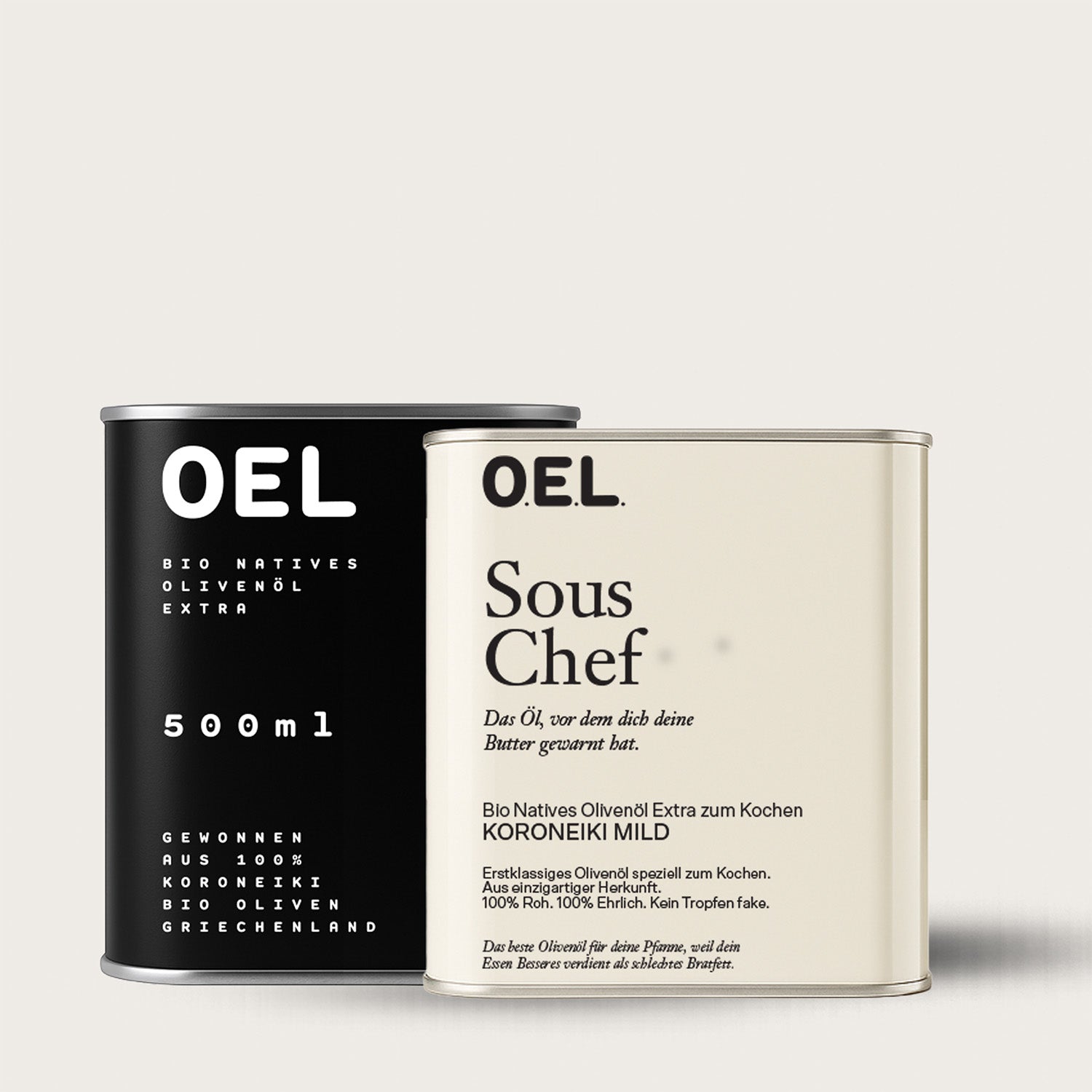
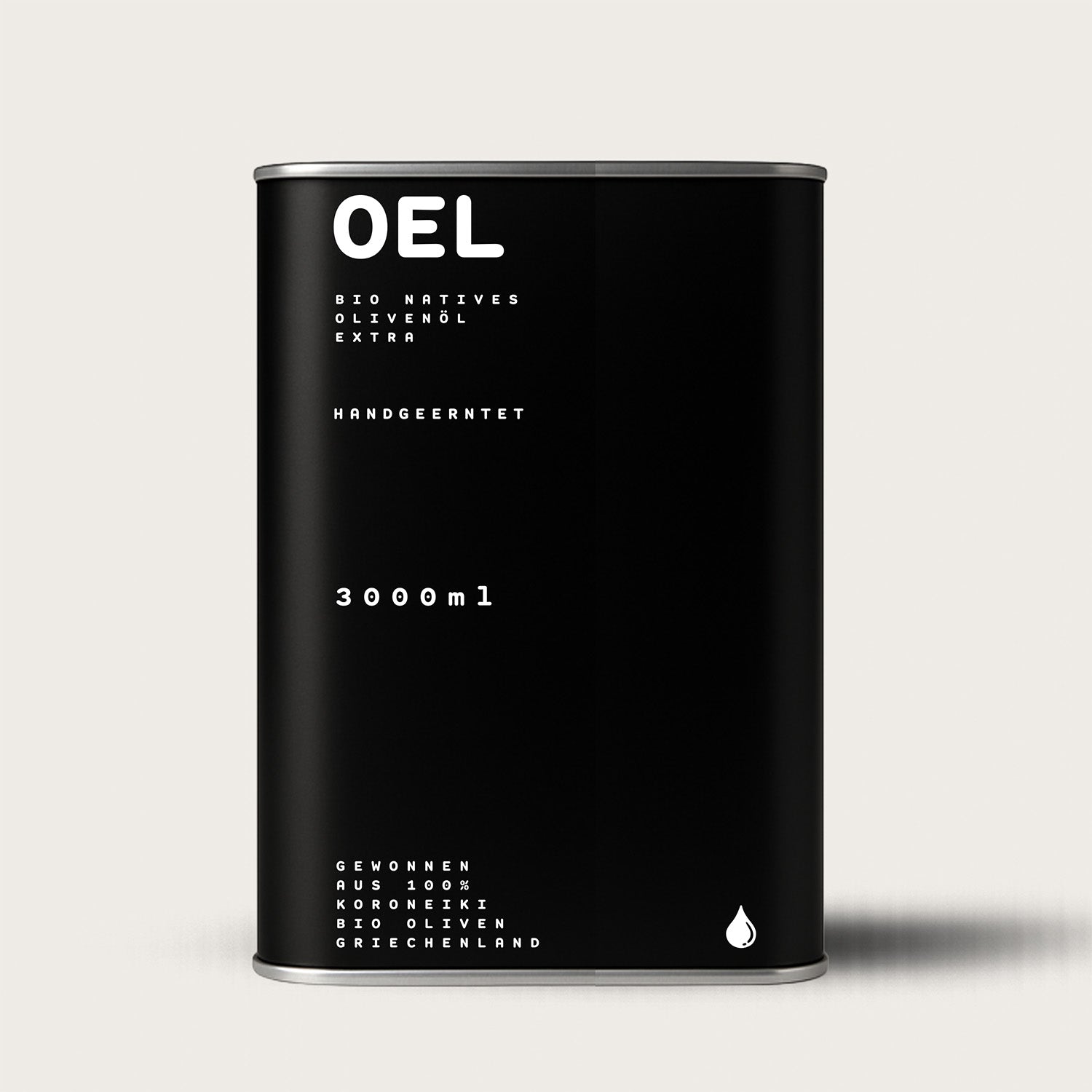
We offer large refill canisters for this purpose.
Our squeeze bottles are designed to last a long time. Instead of buying a new bottle every time, you simply refill it – quickly, cleanly and sustainably.
We offer large refill canisters so you can refill your squeeze bottle again and again. Less packaging, less resource consumption, less waste. More quality, more responsibility, more oil.

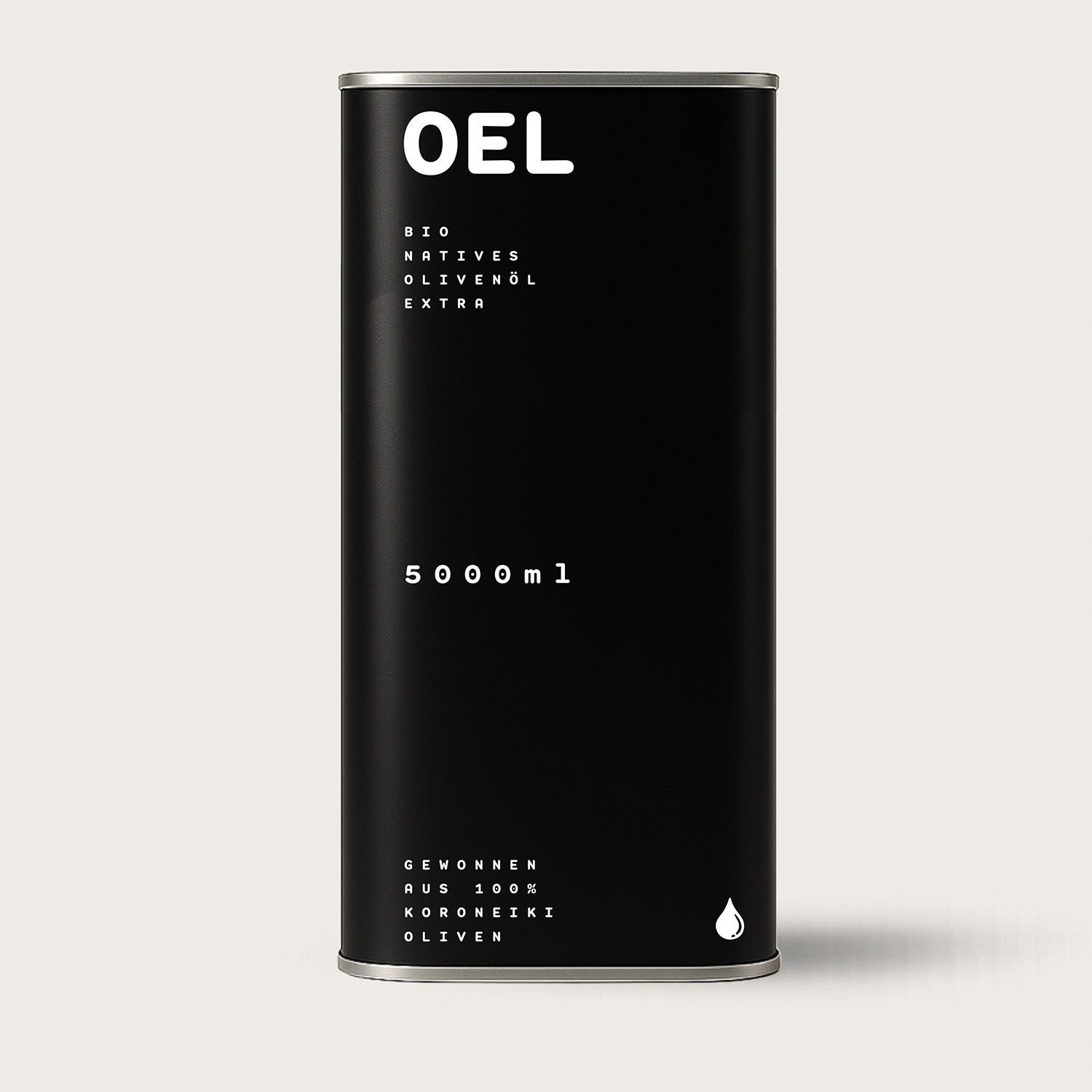

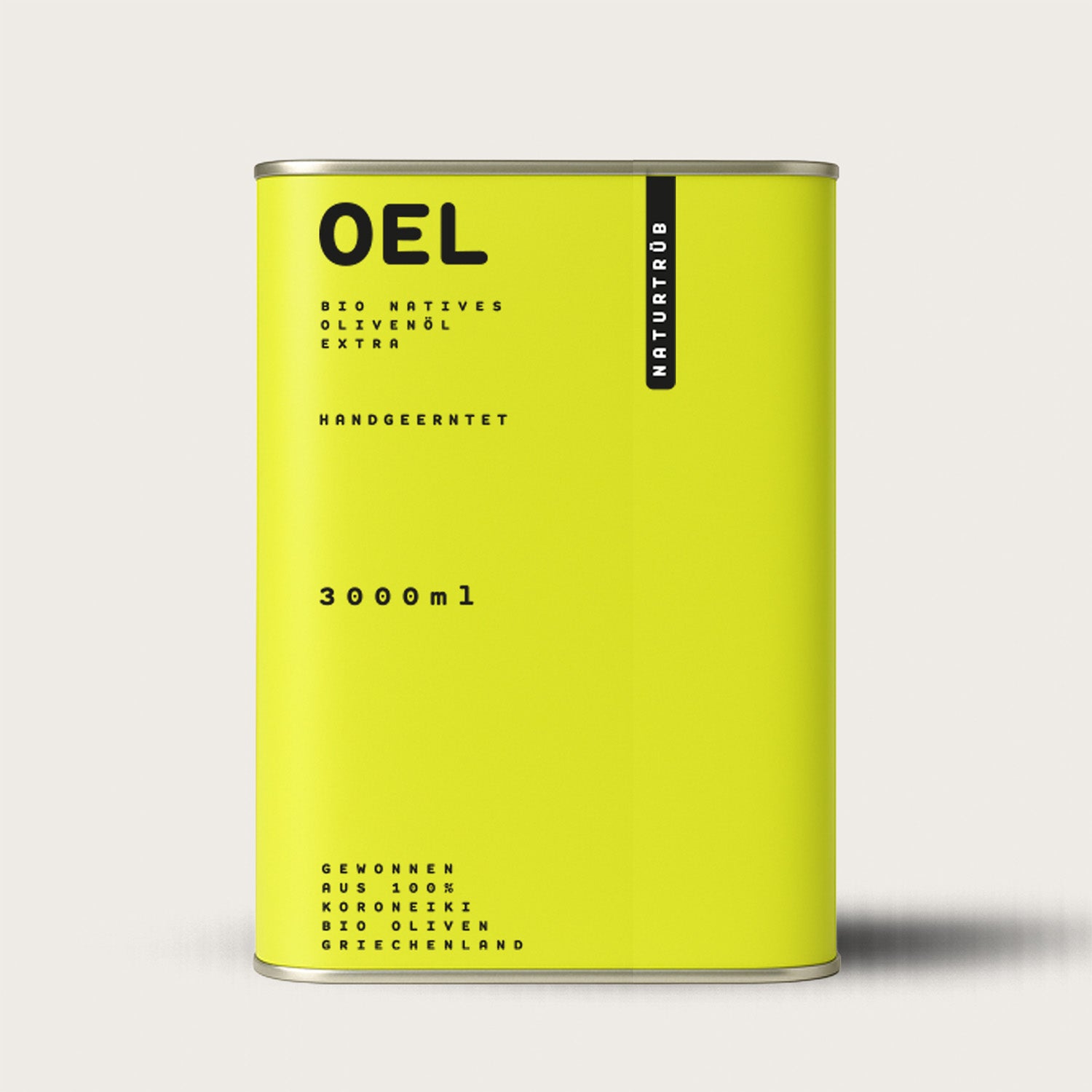
OEL stands for 100% pure Greek virgin organic extra virgin olive oil.
Our oils are single-varietal: We exclusively process the Koroneiki variety.
The harvest is done by hand.
We actively participate in the harvest and production every year, because we
They want to have and control the entire production chain themselves.
The Koroneiki olives for oil grow near Andania, a small town.
Village near Kalamata. Our partner's state-of-the-art olive oil mill is also located here.
Iliad.
The region around Kalamata is considered the most important olive growing area.
Greece. Olives have been cultivated here for millennia.
Besides the Kalamon (or Kalamata) eating olive, the Kalamon olive is also used for oil production.
small green variety Koroneiki cultivated.
For good reason: the stony, hilly landscape, the hot summers
and mild winters demand a lot of resilience from the trees and the farmers and
Calmness is key. These are ideal conditions for the highly aromatic,
slightly bitter Koroneiki olives.
There are strict legal regulations governing the labeling of olive oils.
Extra virgin olive oil (also called extra vergine / extra virgin ) refers to the highest quality grade.
What does that mean in concrete terms?
1. A temperature below 27°C is mandatory throughout the entire production process . This is important to protect the beneficial components. Only under this condition may olive oil be labelled as cold-pressed or cold-extracted and extra virgin .
2. The oil has no organoleptic (i.e., perceptible to the senses) defects.
The taste is fruity.
3. The olive oil has an acidity level below 0.8% .
By the way:
Our olive oils typically have an acidity level of 0.35% to 0.5% - depending on the harvest year and time of harvest.
Single variety means that only olives of one variety are used for oil production - in our case the Koroneiki variety.
There are more than a thousand olive varieties worldwide. And most olive oils on the market are blends, meaning mixtures of oils from different olive varieties, often unfortunately also of different quality grades.
Our olives come exclusively from traditionally farmed areas
Groves in the Kalamata region that are harvested by hand during the day.
No bird or any other creature larger than a fingernail will be harmed here. We strictly reject industrial cultivation methods with fully automatic night-time harvesting, which can kill sleeping birds.
There are two methods to extract oil from olive mash, i.e., solids.
To separate liquids and oils from water: by pressing or by
Extraction by centrifuge. This is where it is decided whether an olive oil is of the highest quality.
It is produced by cold pressing or cold extraction .
The press presses the mash between mats and the centrifuge extracts it.
The oil is extracted from the mash at several thousand revolutions per minute.
Centrifugation has been proven to be the gentlest method for processing olives after harvesting.
to process.
We use cold extraction via a decanter centrifuge. Then...
Our oil is immediately filled into large stainless steel tanks with UV and temperature insulation.
from which we fill our bottles and canisters as needed.
Advantages of the canister:
- Airtight and opaque - two very important criteria for preserving the valuable ingredients
- Tinplate is very easy to recycle. Because it is magnetic, it can be easily fished out in sorting facilities and has one of the highest recycling rates of all packaging (91.1% in 2019, compared to 83.4% for glass).
The canister has a very low weight and, thanks to its rectangular shape, can be packed efficiently. This saves fuel on the long journey from Kalamata to Berlin.
Advantages of the glass bottle:
- She looks great!
- It is easy to open and close.
- It has a dosing spout.
Last but not least: It can be refilled and reused.
Comparison of our olive oils and supermarket olive oil
What distinguishes our olive oils from olive oil from the supermarket?
Liquid gold
Sous Chef
Supermarket olive oil
Yes
Yes
Yes No
Koroneiki
Koroneiki
Not known, mostly a blend
Native Extra
Native Extra
From extra virgin to sophisticated
Aromatic - for refining
Mild - for cooking and frying
Unknown
From the Greek village of Andania
From the Greek village of Andania
Unknown
Harvested by hand
Harvested by hand
Unknown
on your next order (over €30)
permanent credit
for every successful recommendation to friends: